
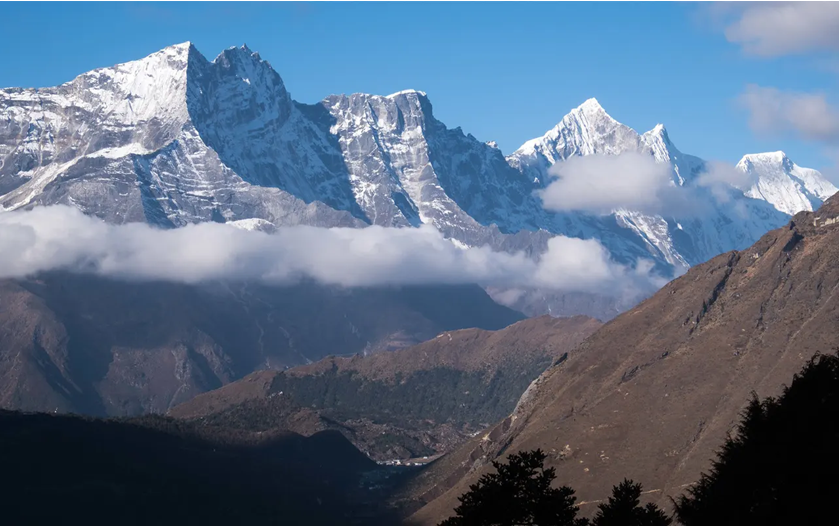
The Everest Three Pass Trek is one of the most exciting and visually dramatic journeys in the Himalayas. This trek crosses three high mountain passes, the Kongma La, Cho La, and Renjo La, which provide a constant view of the snow-covered peaks, deep valleys, turquoise lakes, and traditional Sherpa villages. To the photographers, it is a dream destination.
This Everest Three Pass Trek Photography Guide is going to let you know where you can get the best perspective, when to have the magical light of the sunrise, and where you can find the unknown angles in the trail. This is a guide that will ensure you get the most out of every visit, regardless of the type of camera you may be using, be it a professional camera or a smartphone.
Understanding the Landscape of the Everest Three Pass Trek
The Everest Three Pass Trek will take you to the Sagarmatha National Park located in the eastern part of Nepal. The route will normally begin with a flight to Lukla at 2,860 meters (9,383 ft) and ascends slowly through some well-known destinations like Namche Bazaar, Dingboche, Gokyo, and Everest Base Camp.
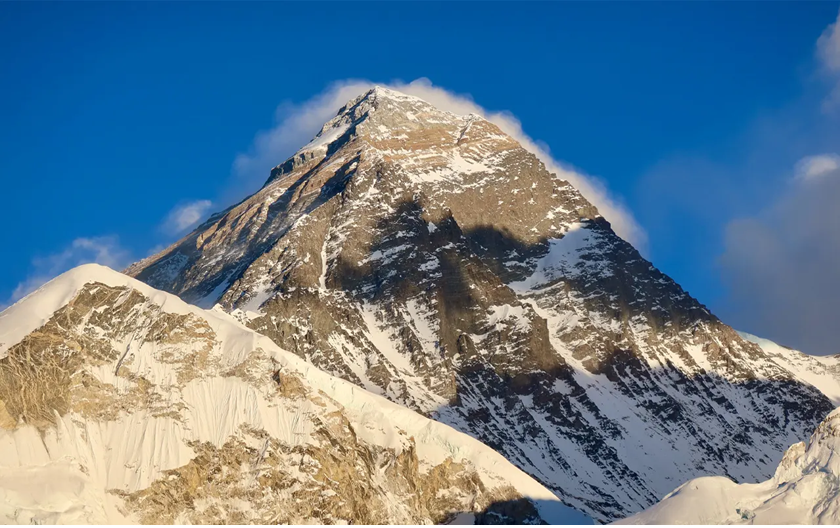
It has three significant passes, including Kongma La at 5,535 meters (18,159 ft), Cho La at 5,420 meters (17,782 ft), and Renjo La at 5,360 meters (17,585 ft). The panoramic views are different in character and are provided by each pass. You will see Mount Everest at 8,848.86 meters (29,031 ft), Lhotse at 8,516 meters or 27,940 ft, Makalu at 8,485 meters or 27,838 ft, and Cho Oyu at 8,188 meters or 26,864 ft, among many others.
The scenery is different each day because of the perpetual variation of elevation. The forests are replaced by alpine meadows that give way to rocky high altitude and glacial geography. This is what makes the Everest Three Pass Trek so gratifying for the photographer.
Best Viewpoints on the Everest Three Pass Trek
Namche Bazaar, at 3,440 meters (11,286 ft), is one of the first significant photography features. The town has a viewpoint, the Everest View Hotel at 3,880 meters (12,730 ft), which offers a clear view of the mountains Everest, Ama Dablam, and Lhotse. The panoramic shots are ideal for portraying the size of the mountains in the sky.
Another good place is Tengboche, 3,867 meters (12,687 ft) in elevation. The monastery is located against Ama Dablam, which is 6,812 meters (22,349 ft) high. The place is particularly beautiful in the early morning and late afternoon light. You are able to take pictures of monks moving around the monastery and the snow mountainous sceneries behind them, and you get some real culture captures.
The 5,545 meters (18,192 ft) Kala Patthar is usually regarded as among the best scenic spots in the whole Everest area. It is on the top of Gorak Shep, 5,164 meters (16,942 ft). Kala Patthar is one of the places that offer one of the closest and clearest views of Mount Everest. The mountain is very huge, and the other peaks surrounding it are beautiful to shine in the sunrise and sunset.
Another sightseeing point that should be covered in the Everest Three Pass Trek is Gokyo Ri at an altitude of 5,357 meters (17,575 ft). The summit on the mountain is rewarded by a beautiful panorama of the Gokyo Lakes beneath and four 8,000-meter mountains in the distance. The differentiation between the blue lakes and the white mountains produces dramatic compositions.
Another most photogenic pass is the Renjo La at 5,360 meters (17,585 ft). The best view is that of the whole Gokyo Valley and numerous high mountains that are standing on the top. It is best suited for landscape photography because of the open view.
Sunrise and Sunset Photography Spots
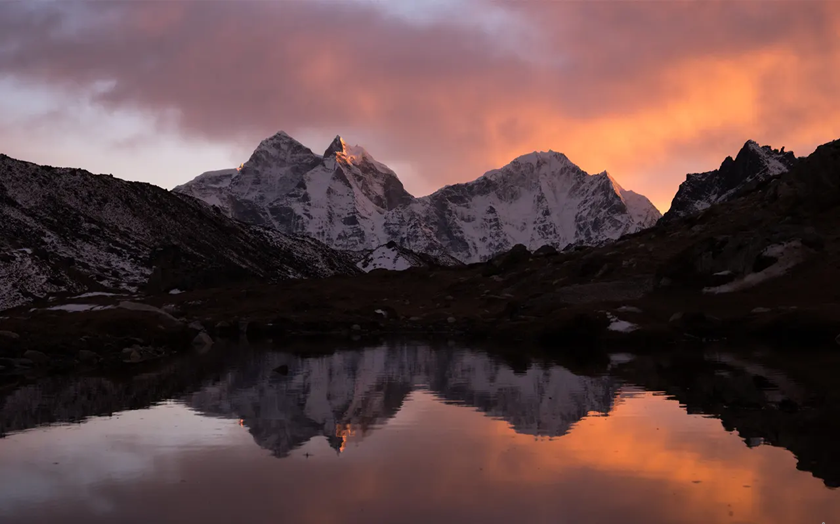
One of the most magical moments in the Everest Three Pass Trek is the sunrise. The light of the morning changes the snowy mountains into gold and pink.
Kala Patthar is the best place for a sunrise photographer. The beams light up slowly as the sun ascends over your back, making Mount Everest and the surrounding mountains shine. The clear sky and the cold air usually make clear and sharp images. You can be there early and get a good location and position your camera before the light shifts.
Another good place to see the sunrise is Gokyo Ri. Peaceful and balanced photos are formed due to the reflection of the morning light on the Gokyo Lakes below. The perspective here is broad, and therefore, there is scope for experimentation with various compositions, like foreground rocks or prayer flags.
Tengboche monastery is a great location to capture sunlight. Ama Dablam is standing tall in the purple hues of the sky in the background of the monastery as the sun sets. The photos you make become more interesting with the varying colors of the sky.
Even in such small villages as Dingboche at 4,410 meters (14,469 ft) and Thame at 3,800 meters (12,467 ft), have gorgeous views of the sunrise. You get a feeling of how life is in the mountains by seeing the first light reach the peaks as the village houses provide the smoke.
Hidden Angles and Unique Perspectives
The famous views are beautiful, but the most memorable photos are often taken during simple, unexpected moments rather than the obvious ones.
On the way between Namche and Tengboche, it is possible to fit Everest between trees or prayer flags. These are the natural frames that contribute to the depth and interest of your images. Finding the highest mountains is not the only way to explore the details; you may see stone walls, suspension bridges, carved mani stones, and so on.
The rugged and dramatic landscape of the Cho La Pass is 5,420 meters (17,782 ft). There are icy parts and rocky tracks that have powerful textures. When the photographer is low to the ground, it will emphasize the rugged ground as well as accentuate the mountains in the background.
Towards the Gokyo Lakes, a shot of reflections in the calm weather should be attempted. At elevations of 4,750 meters (15,584 ft), there is Lake Dudh Pokhari, which provides reflections of the nearby mountains in a mirror. The first part of the morning normally offers the most serene water.
At Kongma La (5,535 meters, 18,159 ft), the scenery is distant and wild. Do not simply make panoramic shots, but rather emphasize the patterns in the rocks or trails. These minor details may narrate the passage.
The photography of trekkers walking along ridgelines can also be added. It demonstrates the sizes of the mountains and renders the image more familiar.
Capturing Culture and Daily Life
Everest Three Pass Trek is not all about mountains. It is additionally concerning the culture of the Sherpas and their local life.
The Namche Bazaar, 3,440 meters (11,286 ft), is a vibrant town where one can take pictures of the market, colorful shops, and traditional houses. The morning light is ideal when capturing people at work.
There is a Tengboche Monastery, and respectfully take photos. Request permission where necessary. The low light makes the atmosphere warm inside the monastery. In case you are not able to use flash, you can use steady hands or a stable surface.
The trail is often lined with yaks and dzopkyos (yak-cow hybrids). Taking pictures of them on suspension bridges or having tea houses will make you experience the Everest Three Pass Trek Photography even more authentic.
Very strong foreground subjects include prayer wheels, mani walls, and fluttering prayer flags. They add spirituality to your pictures and relate the natural world to the traditions of the locality.
Weather, Light, and Timing
The Everest Three Pass Trek has the best seasons during spring (March to May) and autumn (September to November). The skies in these months are normally clear, and visibility is great.
In the mountains, clouds move very fast. Occasionally, the half-cloudy sky will produce more dramatic light than a transparent sky. Wait long and look at the movement of light over the mountains.
The weather can vary quickly at high altitudes over 5,000 meters (16,404 ft) of altitudes. Always keep your camera out of dust, cold, and blowing snow. When it is cold, batteries are consumed very quickly, and it is helpful to put them in your pocket and keep them warm.
Practical Photography Tips
Lightweight traveling is a significant aspect of the Everest Three Pass Trek. Kongma la (5,535 meters) (18,159 ft) and Cho La (5,420 meters) (17,782 ft) are high passes; hence, excess equipment is likely to be exhausting to carry.
Most situations can be captured by a wide zoom lens. A wide-angle lens is pertinent in the case of a landscape, whereas the mid-range zoom is appropriate in the case of a portrait and a detail. In case you like to do night photography, the locations such as Gokyo at 4,750 meters (15,584 ft) are ideal for taking pictures of the sky full of stars.
Keep your camera in easy-to-reach places. There are lots of wonderful moments, which occur unexpectedly, like the light breaking through the clouds or the yaks.
Final Thoughts
Everest Three Pass Trek is regarded as one of the most comprehensive treks in Nepal. It is an adventure, culture, and memorable mountainous landscape. Through proper planning and attention to detail, you are able to make photographs that make you feel the spirit of the Himalayas.
This Everest Three Pass trek photography guide features the most scenic points of view, sunrise locations, and secret points that can be encountered on the trail. Between Kala Patthar, 5,545 meters (18,192 ft), and the serene Gokyo Lakes, 4,750 meters (15,584 ft), each part of the trail has something to see.
Slow down, be mindful of the environment and culture of the land, and get to experience the adventure. It is precisely in situations when you slow down and experience the mountains surrounding you in their entirety that you can create the best photographs.
