
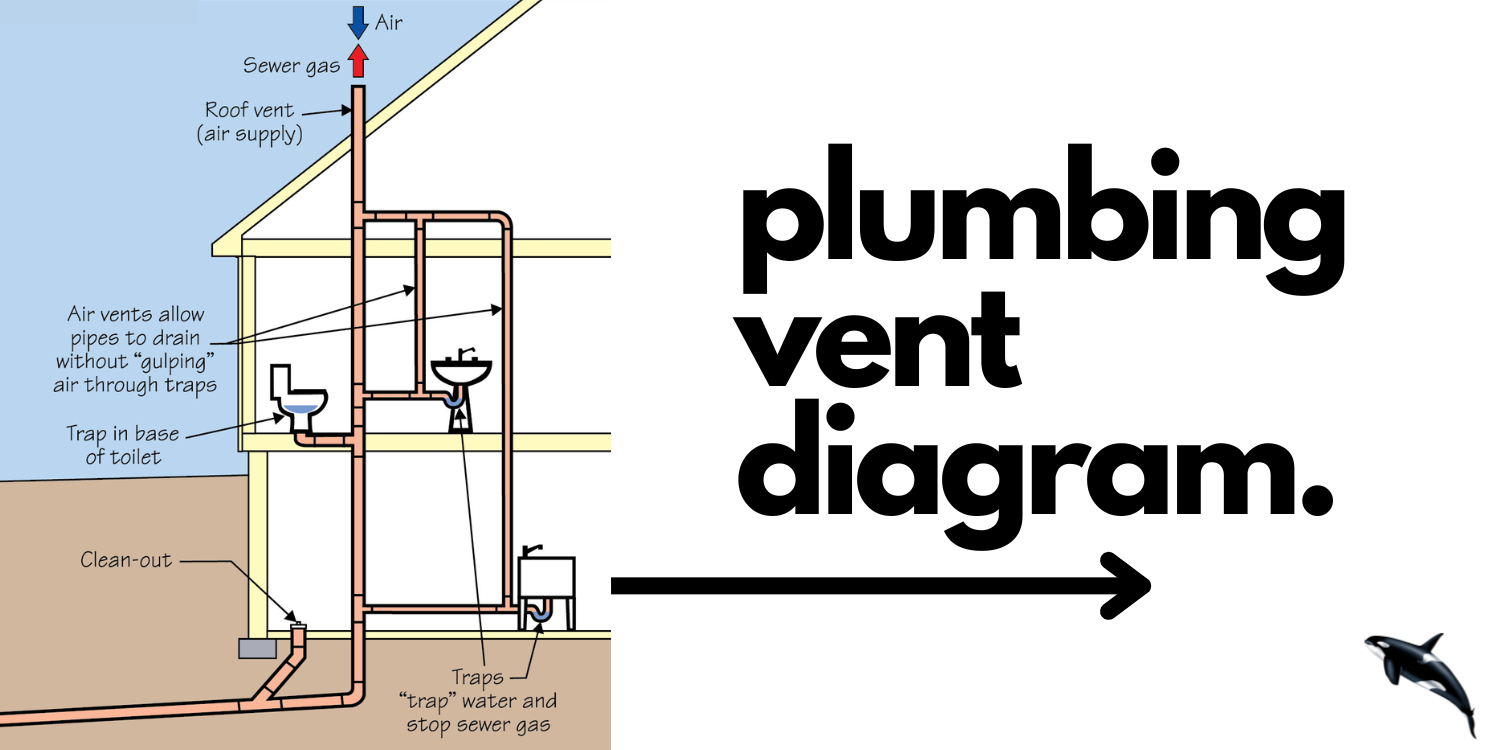
Most homeowners think of drainage as a simple gravity process in which wastewater flows downward through pipes and exits the house without much resistance. In reality, drainage depends on a balance between water flow and air movement inside the plumbing system. When air cannot enter or travel through the rough drain and vent piping properly, wastewater loses the steady movement needed for reliable performance. Fixtures may drain slowly, traps may gurgle, and odors may begin to appear where the system was once quiet and sealed. Plumbing airflow is not an added convenience. It is a core part of how residential drainage maintains speed, pressure balance, and functional separation between wastewater and indoor living space.
Why Air Matters in Drainage
- How Air Supports Water Movement
A drain line works more effectively when air can move alongside flowing water and equalize pressure inside the piping. As wastewater leaves a sink, tub, shower, or toilet, it does not simply slide through an empty tube. It creates pressure changes that need to be moderated so the water column can continue moving without interruption. Vent piping allows the system to draw in air, reduce vacuum effects, and prevent the drain line from fighting itself. Without that air support, water can begin pulling too hard on nearby traps or slow as pressure imbalances build inside the pipe. This is why a fixture can appear partially clogged even when the issue is not a solid blockage. Poor airflow can imitate common drain problems because the water lacks the internal balance needed to move smoothly. A properly vented plumbing system allows drainage to remain more stable, more predictable, and less likely to create the strange noises or slow emptying that often signal deeper performance issues.
- Why Venting Prevents Pressure Disturbances
One of the main functions of plumbing airflow is to prevent pressure disturbances that interfere with trap protection and fixture drainage. Every trap under a sink or floor drain is designed to hold a water seal that blocks sewer gases from entering the house. That seal depends on pressure remaining balanced enough that the trap water is not siphoned out or pushed around by surges inside the drain system. When vents are obstructed, undersized, or poorly configured, moving wastewater can create negative pressure that pulls water from nearby traps. In other cases, compressed air may push against fixture drains, creating bubbling or burping at the fixture opening. These reactions are often dismissed as minor nuisances, but they reflect instability inside the drainage network. Contractors who handle Plumbing Services in Papillion may explain that recurring gurgling at one fixture can sometimes be traced back to an airflow imbalance elsewhere in the vent arrangement, or just to a clog near the fixture itself. Proper venting helps each drain perform without disturbing the pressure conditions needed by connected fixtures throughout the system.
- How Poor Airflow Changes Fixture Performance
When plumbing airflow is compromised, the effects often show up gradually through daily fixture use. A bathroom sink may empty more slowly than before, even after the trap is cleaned. A toilet may flush with an irregular pull, followed by a faint gurgle in a nearby tub. A washing machine standpipe may drain, but not as quickly or quietly as expected. These symptoms often develop because water is moving through a system that cannot breathe correctly. Instead of flowing with consistent momentum, the discharge encounters internal resistance due to trapped air, shifting pressure zones, or incomplete vent relief. In multi-fixture branches, one appliance discharge can even influence another fixture because airflow is no longer managed evenly. This is why drainage performance should not be judged only by whether water eventually disappears. Timing, sound, and consistency all matter. A system with healthy airflow usually drains with less turbulence, fewer pressure-sideside effects, and stronger protection against intermittent problems that are difficult to trace if the focus stays only on the visible drain opening.
Why Drainage Stability Depends on Air Balance
Reliable drainage comes from balance, and that balance is created by the interaction between water movement and air movement inside the plumbing system. When airflow is adequate, fixtures drain more smoothly, traps keep their seals more consistently, and the entire system operates with less noise and less unpredictability. When airflow is restricted or poorly managed, the result can be slow drainage, gurgling fixtures, trap disruption, and recurring odor concerns that seem unrelated until the venting side is examined. Plumbing system airflow is, therefore, not hidden background activity. It is an active force that allows drainage to function as intended. Understanding that relationship helps explain why some drainage issues cannot be solved by clearing a fixture alone. Proper performance depends on providing water with a clear path out and air with a clear path in, so the system can stay balanced from one fixture to the next.
