
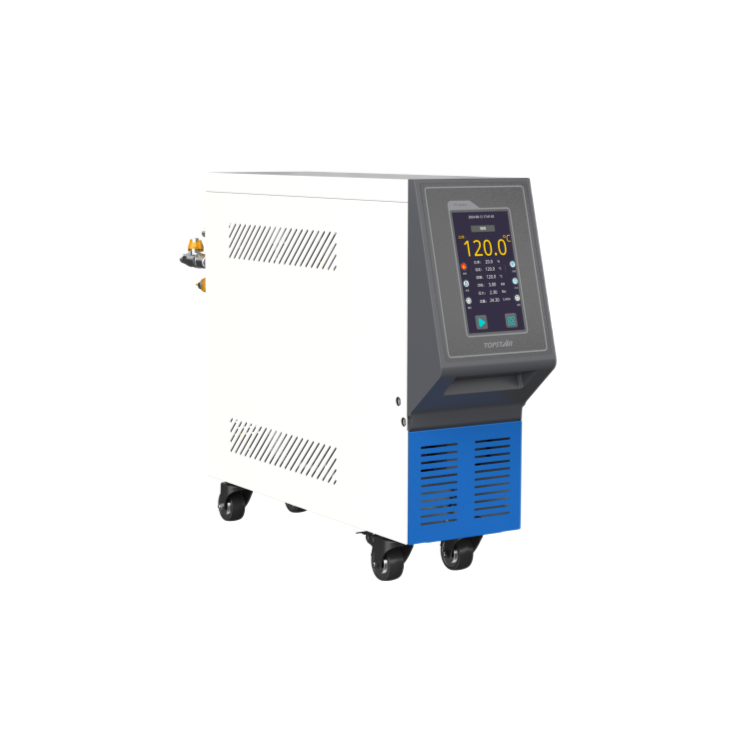
Mould temperature controllers have long been a critical auxiliary system in injection moulding processes. Traditionally, mould temperature controllers maintained stable mould temperatures through basic heating and cooling cycles, heavily relying on manual parameter settings and operator experience. However, as manufacturing enters the Industry 4.0 era, this traditional approach is no longer sufficient to meet the growing demands for precision, efficiency, and sustainability.
By 2026, mould temperature controllers will no longer be considered standalone temperature-control devices. Instead, they will have evolved into intelligent thermal management systems deeply integrated with injection moulding machine, production lines, and factory-level digital platforms. Manufacturers increasingly demand higher part quality consistency, shorter production cycles, and lower energy consumption. These pressures are driving mould temperature controller technology towards intelligent, data-driven optimisation.
Mould Temperature Controllers and AI Integration: The Foundation of Intelligent Temperature Optimization
AI-driven technology represents a fundamental shift in how mould temperature controllers operate. Modern mould temperature controllers no longer rely solely on fixed-parameter PID algorithms; they increasingly employ machine learning models that analyse vast amounts of process data in real time.
By 2026, high-end mould temperature controllers will integrate sensors that continuously collect temperature, flow rate, pressure, and environmental data. AI algorithms process this data to identify patterns that are undetectable to human operators. For example, an AI-enabled mould temperature controller can identify subtle temperature fluctuations caused by changes in material viscosity, mould wear, or ambient temperature variations. Based on these insights, the mould temperature controller automatically adjusts heating power, cooling flow rates, and response times. This dynamic optimisation ensures that mould temperature remains within the optimal process window throughout the production cycle, resulting in greater consistency even during long production runs or frequent product changeovers.
Mould Temperature Controller Predictive Control: Reducing Defects and Increasing Yield
One of the most valuable advancements in mould temperature controller technology is predictive temperature control. Traditional systems only react after deviations occur. In contrast, AI-driven mould temperature controllers can predict deviations before they impact product quality.
By 2026, predictive control technology will enable mould temperature controllers to anticipate temperature trends based on historical and real-time data. For example, when the injection moulding machine speeds up production, the mould temperature controller will predict the increased heat load and proactively adjust cooling capacity. This prevents problems such as overheating, warping, sink marks, and internal stress in moulded parts. This feature is particularly crucial for high-precision industries such as automotive, medical devices, and electronics. In these applications, even minor temperature fluctuations can lead to dimensional inaccuracies or surface defects. Smart mould temperature controllers can significantly improve first-pass yield and reduce costly rework.
Smart Factories and Digital Manufacturing
In 2026, another key trend shaping the development of mould temperature controllers is enhanced connectivity. Modern mould temperature controllers are no longer isolated devices; they have become connected nodes within a smart manufacturing ecosystem.
Advanced mould temperature controllers support industrial communication protocols such as OPC UA, Ethernet/IP, and Modbus TCP. These interfaces enable seamless integration with injection moulding machines, MES systems, and factory management software. Through a centralised dashboard, engineers can monitor each mould temperature controller’s performance in real time. AI-driven mould temperature controllers also provide valuable data for digital twins and process simulation models. By feeding precise thermal data into these systems, manufacturers can optimise mould design, validate process parameters, and shorten product development cycles. At the factory level, connectivity enables predictive maintenance. Mould temperature controllers can analyse pump performance, heater efficiency, and flow resistance to detect early signs of wear or blockages.
AI Powers Sustainable Manufacturing
Energy efficiency is becoming a strategic priority for manufacturers worldwide. In 2026, the design of energy-efficient mould temperature controllers is primarily driven by AI-based control strategies.
Traditional mould temperature controllers often operate heaters and pumps at fixed power levels, resulting in unnecessary energy consumption. AI systems continuously adjust power output in response to real-time thermal demand. This precise control reduces energy waste without compromising temperature stability. Furthermore, smart mould temperature controllers optimise the coordination of heating and cooling. Instead of overshooting and then overcooling, AI algorithms maintain a balanced thermal distribution, minimising energy fluctuations. This approach not only reduces electricity consumption but also reduces thermal stress on the mould.
Intelligence Simplifies Operation
Despite the increasing complexity of mould temperature controllers, their operation will become simpler by 2026. AI-driven user interfaces play a crucial role in improving usability and reducing training requirements. Modern mould temperature controllers are equipped with intuitive touchscreens, guided setup processes, and automatic parameter recommendation functions. Operators no longer need to manually configure dozens of settings; they select the material type, mould structure, and production goals, and the mould temperature controller automatically generates optimised control parameters. AI-based diagnostic functions further enhance the user experience. When anomalies occur, the mould temperature controller identifies potential causes and suggests corrective actions. This reduces troubleshooting time and prevents minor issues from escalating into major production problems.
Strategic Value Beyond Temperature Control
With advancements in mould temperature controller technology, purchasing decisions are increasingly focused on long-term strategic value rather than initial cost. By 2026, manufacturers must consider intelligence, connectivity, scalability, and service support when evaluating mould temperature controllers.
AI-driven mould temperature controllers deliver significant benefits in terms of quality, efficiency, and sustainability. They support stable production under various conditions, reduce reliance on human expertise, and seamlessly integrate into digital manufacturing environments. Future mould temperature controllers will likely be a core component of intelligent manufacturing s
