
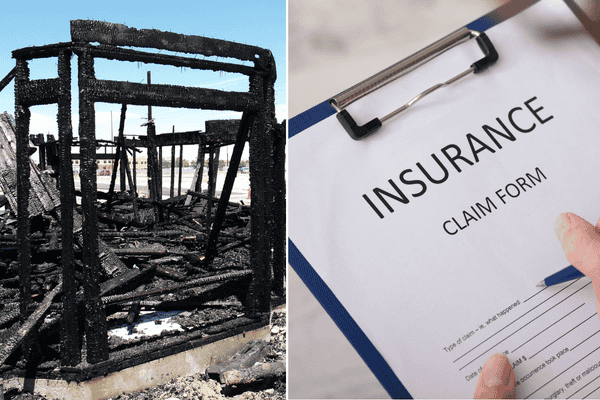
Wildfires do not just take property. They take stability, safety, and the sense that systems designed to protect you will actually do their job when it matters most. And in 2026, that last part has become harder and harder to count on.
According to Swiss Re’s latest sigma report, the Palisades and Eaton fires alone produced combined insured losses of $40 billion in 2025, making wildfire the fastest-growing insured risk category in the world, with losses climbing roughly 12% per year. Yet despite that scale, wildfire survivors across California are still reporting delays, underpayments, and outright denials from their insurance carriers.
If you have lost your home or suffered serious property damage, documentation is the single most powerful tool in your hands. It determines what you recover, how fast you recover it, and whether your claim survives a dispute. This guide walks you through exactly what to do, room by room, category by category, and what to do if your insurer still turns you away.
What Should You Document After a Wildfire?
Everything. That is not an exaggeration. Wildfire damage extends far beyond charred walls. It includes smoke contamination inside cabinets, soot on surfaces that appear clean to the naked eye, water damage from firefighting efforts, and the destruction of personal property that may not be immediately visible.
According to Consumer Reports, you should photograph and record every damaged item and include the amount you originally paid along with any receipts you can locate. But the scope of documentation goes deeper than photos. Here is a practical breakdown:
Structural Damage Walk every room and photograph walls, ceilings, floors, windows, and doors. Focus specifically on smoke-stained surfaces, melted fixtures, warped framing, and water intrusion. Even if a room looks mostly intact, capture it because smoke and soot damage is often invisible at first glance but chemically significant.
Personal Property Create a room-by-room inventory of every item lost or damaged. Include a description of the item, its estimated original value, approximate purchase date, and the cost to replace it today. For high-value items like electronics, jewelry, and appliances, pull together any receipts, credit card statements, warranty cards, or online purchase confirmations you can access through email accounts or cloud storage.
Outbuildings and Exterior Features Garages, fences, sheds, driveways, landscaping, and any structures not attached to the main home all fall under Coverage B of a standard homeowners policy. Photograph each one and document destruction separately. Insurers have a documented pattern of underpaying these categories to minimize total settlement amounts.
Additional Living Expenses (ALE) Save every receipt from the moment you were displaced. Hotel stays, restaurant meals, laundry, temporary rentals, transportation, clothing purchased out of necessity. Most standard homeowners policies include ALE coverage, and under California law, policyholders in declared disasters are entitled to at least 24 months of ALE benefits, regardless of what a policy document says.
How Do You Create a Wildfire Damage Inventory?
A wildfire damage inventory is a formal, itemized record of everything you lost or had damaged. It is one of the most important documents you will submit to your insurer, and it is often where underpaid claims begin to fall apart.
The California Department of Insurance recommends working room by room and listing everything, even items that exceed your policy limits. Items that exceed your coverage cap may still be claimable as a documented loss for tax purposes.
Use this structure for each line item in your inventory:
| Column | What to Include |
| Item Description | Be specific: “Samsung 65-inch QLED TV, Model QN65Q80C” not just “TV” |
| Purchase Date | Approximate is fine if you do not have exact records |
| Original Cost | Use receipts, bank statements, or similar items online as a reference |
| Replacement Cost (2026 pricing) | Search current retail prices and document your source |
| Condition Before Fire | Note if the item was new, lightly used, or well-worn |
| Supporting Evidence | Receipt, photo, screenshot, product registration |
If you had a home inventory prepared before the fire, reference it immediately. If you did not, use utility bills, streaming subscriptions, photos on your phone, and social media pictures taken inside your home to reconstruct what was there. Courts and adjusters have accepted social media photos as legitimate supporting evidence.
How Soon Do You Need to File a Wildfire Insurance Claim?
Filing windows vary by insurer and by state, but most policies require you to report the loss and initiate a claim within 30 to 60 days of the event. Some policies allow longer windows, but waiting creates risk. Insurers can argue that late reporting delayed their ability to assess damage accurately, and they will sometimes use that argument to justify a reduced payout or a denial.
Contact your insurer or your insurance agent as soon as it is safe to do so, even if you cannot yet access the property. Provide your policy number, describe the damage in general terms, and ask specifically what documentation they will require and what their internal deadlines are. Get every part of this conversation in writing, either by following up a phone call with an email summary or by requesting email confirmation of anything communicated verbally.
Under California law, once you file a claim, your insurer must acknowledge receipt within 15 days, and they must accept or deny your claim within 40 days of receiving your completed proof of loss. If they need more time, they are legally required to notify you in writing and provide updates every 30 days.
What Does Homeowners Insurance Cover After a Wildfire?
A standard homeowners policy typically covers four primary categories of wildfire loss:
- Coverage A (Dwelling): Repair or rebuilding of the primary home structure
- Coverage B (Other Structures): Detached garages, fences, sheds, and similar outbuildings
- Coverage C (Personal Property): Furniture, clothing, electronics, appliances, and other belongings
- Coverage D (Loss of Use / ALE): Temporary housing and additional living expenses while the home is uninhabitable
Standard policies also cover damage caused by firefighters in the course of putting out the fire, including water damage from hoses and hose-related structural damage. This is a detail many homeowners do not realize until they try to claim it.
It is worth knowing the difference between two key coverage types before you negotiate:
Actual Cash Value (ACV) pays out what your property was worth at the time of the loss, after depreciation. A five-year-old laptop might be worth $200 under ACV even if a new replacement costs $1,200.
Replacement Cost Value (RCV) pays what it costs to replace the item at today’s prices, without deducting for depreciation. If you have RCV coverage, make sure your insurer is applying it correctly. Many do not without pushback.
Does Homeowners Insurance Cover Smoke Damage from Wildfires?
It should, but this has become one of the most contentious areas of wildfire claims in 2026. Thousands of homes that did not physically burn were still contaminated by toxic smoke from the January 2025 LA fires, and many insurers initially denied those claims or offered minimal payouts.
In response, California Insurance Commissioner Ricardo Lara introduced AB 1795, the Smoke Damage Recovery Act, which establishes the nation’s first enforceable public health and insurance claims standards for smoke-damaged homes. A judge also ruled in 2025 that the FAIR Plan’s “sight and smell” threshold for smoke damage was illegal, meaning visible contamination is not a prerequisite for coverage.
If your home was exposed to smoke, document it thoroughly:
- Take air quality readings if possible and hire a certified industrial hygienist for a professional assessment
- Photograph soot deposits on surfaces, inside HVAC vents, inside cabinets, and on fabrics
- Collect any health symptoms you or your family experienced in writing
- Request that your insurer put any smoke damage exclusion in writing and cite the specific policy language
If your insurer denies your smoke damage claim or offers an amount that does not reflect actual remediation costs, that denial may be legally challengeable.
Why Do Insurance Companies Deny Wildfire Claims?
According to Allied Public Adjusters, the 2025 Los Angeles fires resulted in more than 17,000 structures destroyed and estimated insured losses between $20 billion and $45 billion. That magnitude prompted some insurers to apply aggressive denial strategies to limit their exposure.
The most common reasons wildfire claims are denied or underpaid include:
Insufficient documentation. If you cannot prove what was damaged, its value, or its condition before the fire, your insurer has grounds to reduce or reject the claim. This is why documentation is not optional.
Late filing. Missing internal deadlines gives insurers a procedural reason to deny claims that would otherwise be valid.
Policy exclusions. Some policies contain exclusions that insurers misapply to wildfire damage. A common example is water damage exclusions being cited to deny coverage for firefighting water intrusion. As noted by insurance law professionals, these exclusions often do not legally apply to wildfire-related water damage.
Undervalued estimates. An adjuster may undercount the damage or use depreciated values when replacement cost coverage applies. Always request a detailed, written breakdown of how any settlement figure was calculated.
Lapsed or cancelled policies. In the months before the January 2025 fires, major insurers cancelled thousands of policies in high-risk zip codes. If your policy was cancelled, review whether the timing of that cancellation triggered any legal protections under California’s moratorium rules.
What Can You Do If Your Wildfire Insurance Claim Is Denied?
A denial is not the end of your claim. It is often the beginning of a negotiation that many homeowners give up on too early.
Step 1: Request the denial in writing. Your insurer is legally required to explain which specific policy provisions support the denial. Vague denials are a red flag. Force them to be precise.
Step 2: Gather independent estimates. Hire a licensed contractor and, if relevant, a certified restoration specialist to assess your losses independently. Their professional assessment carries significant weight in disputes and can reveal damages the adjuster missed or undervalued.
Step 3: File a written appeal. Send your appeal by certified mail and keep copies of everything. Include your independent estimates, any new documentation, and a point-by-point rebuttal of the denial rationale.
Step 4: File a complaint with your state’s Department of Insurance. In California, the California Department of Insurance has a consumer hotline at 1-800-927-4357 and actively investigates bad faith conduct. Filing a complaint creates an official record and can prompt the insurer to act.
Step 5: Consult a wildfire insurance attorney. When a claim has been wrongly denied or significantly underpaid, especially in a case involving the Eaton Fire or other LA-area wildfires, working with an attorney who understands the specific legal landscape is often the difference between recovering what you are owed and walking away with a fraction of it.
The Eaton Fire Legal Team has been helping wildfire survivors navigate exactly these situations, including disputes over smoke damage, ALE denials, and total loss settlements that do not reflect true rebuilding costs. If your claim has been denied or you believe your payout is far below what the damage warrants, a legal consultation can clarify your options at no upfront cost.
Build Your Documentation File Before Meeting the Adjuster
Think of your documentation package as evidence in a case, because in a dispute, that is exactly what it becomes. Before your adjuster’s visit, organize everything into a clear, accessible format:
- A complete photo and video archive organized by room and damage category
- Your written inventory with supporting evidence for each line item
- All communications with your insurer, logged by date, with names and contact information noted
- Copies of all receipts for displacement expenses
- Any independent contractor estimates or professional assessments
- Medical records or health documentation related to smoke exposure, if applicable
- A copy of your full insurance policy and declarations page
United Policyholders, a nonprofit organization supporting wildfire survivors, recommends storing all documentation in cloud storage so it remains accessible even if physical copies are lost. Their Roadmap to Recovery program offers free guidance specifically tailored to the January 2025 LA wildfire survivors.
Your Documentation Is Your Power
Seven in ten LA wildfire survivors reported significant insurance-related challenges in late 2025, according to a CalMatters survey. But the homeowners who fared best shared something in common: they documented everything, pushed back on low estimates, and did not accept an insurer’s first answer as the final one.
The wildfire insurance process is not designed to be simple. It is designed to be navigated. And the homeowners who treat it as the business transaction it is, with organized evidence, documented communications, and professional support when needed, consistently recover more than those who do not.
If you are dealing with a claim denial or a settlement that does not come close to covering your actual losses, you do not have to face that alone. Experienced wildfire legal services, like those offered through Roxell Richards’ Eaton Fire Legal Services, exist specifically to level the playing field between homeowners and insurance companies that are motivated to pay as little as possible.
Start documenting. Stay organized. And know when to ask for help.
