
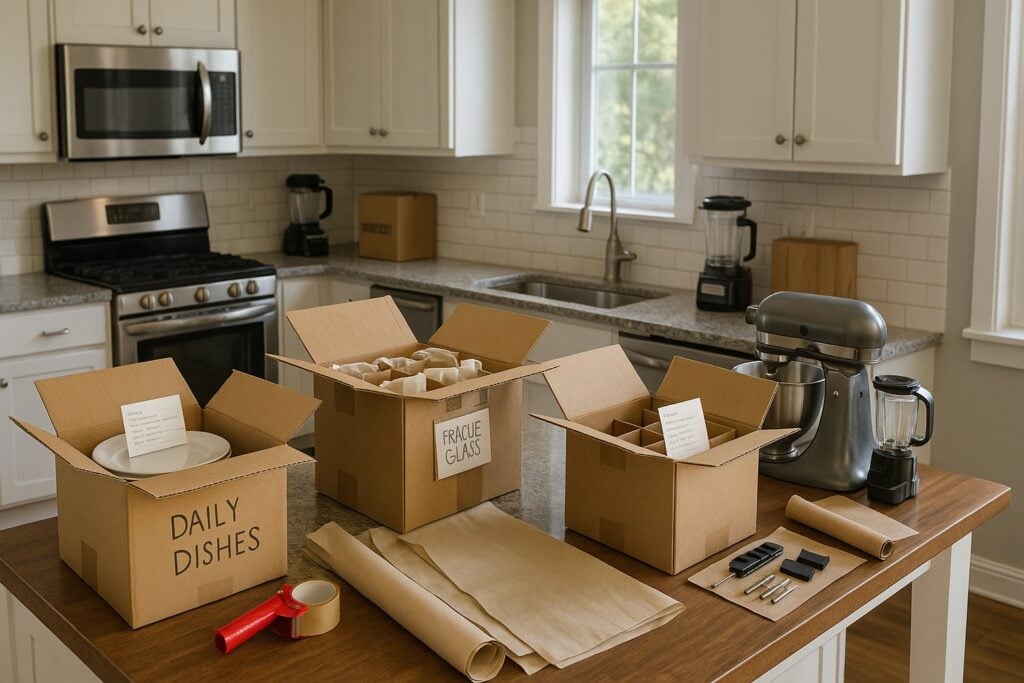
The kitchen is often one of the most difficult rooms to pack during a move. It’s full of oddly shaped, fragile, and heavy items that do not fit neatly into standard boxes. Most of the rest of the house packs up in a predictable way. Clothes go in bags or wardrobe boxes, books go in small boxes, and linens fill the gaps.
In addition to fragile items, kitchens contain liquids and small loose components that require careful packing. Spices leak. Oils spill. That junk drawer that often gets overlooked also needs to be sorted and packed. People put off the kitchen until the last possible moment, and by then they’re tired, running out of boxes, and wrapping mugs in clothing because proper packing materials are no longer available.
Here is a practical guide to packing your kitchen safely and protecting fragile items.
Start With What You Don’t Use Every Day
Baking supplies, specialty gadgets, holiday platters, specialty appliances, and other rarely used kitchen items can be packed weeks before the move. The trick is working from the outside in. Pack the stuff you won’t miss, and leave out what you need to get through the final stretch.
A lot of people don’t do this. They wait until the last two days and then try to pack an entire kitchen in one shot. This increases the risk of damage and misplaced components. Starting early with the less-used items cuts the final-day workload down by more than half.
Glasses, Plates, and the Stuff That Breaks
Every glass and plate should be wrapped individually in packing paper. Newspaper works in a pinch, but the ink transfers onto surfaces, which may require additional cleaning before use. Packing paper is cheap and worth the small cost.
Stand plates on their edges inside the box, not flat. Flat stacking puts all the weight on the bottom plate, and a hard bump from the truck can crack several at once. Glasses should go in cell boxes if you can get them, or wrapped with extra paper stuffed inside the cup before the outside layer goes on.
Put heavier items at the bottom of the box. Mugs below wine glasses. Bowls below champagne flutes. And fill every gap with crumpled paper. Items should be packed securely so they do not shift during transport.
Flatware and Cutlery Need More Attention Than People Think
It’s tempting to just toss the silverware drawer into a bag and call it done. But forks scratch against knives, serrated edges catch on everything, and loose pieces rattle around during transport.
If you’re not sure how to pack silverware properly, the recommended method is to sort by type, wrap bundles in packing paper or cloth, and secure them with rubber bands or tape. Knives should always be wrapped separately with the blade covered. A few layers of paper secured with tape around the sharp edge help keep everyone safe during unpacking.
For nicer sets or anything sterling, anti-tarnish cloth or acid-free tissue paper prevents discoloration during transit. Don’t skip this step if you’ve got pieces with sentimental or real value. Moisture and air exposure during a move can speed up tarnishing, which can require additional cleaning or restoration later.
Small Appliances and the Cord Problem
Blenders, toasters, stand mixers, and air fryers. Most kitchens contain several small appliances, and their cords can easily become tangled during packing.
Wrap each cord and tape or rubber-band it to the appliance. If you still have the original boxes, use them. If not, wrap the appliance in a towel or packing paper and place it snugly in a box where it won’t bounce around. Heavy appliances like stand mixers get their own small box. Placing heavy appliances in large boxes with lighter items increases the risk of shifting and causing damage.
Pantry Items Are Trickier Than They Look
Open spice jars, half-used bags of flour, cooking oils, and vinegar bottles. These items are common sources of leaks and contamination. A loose lid can result in leaks that damage multiple boxes and their contents.
Seal open containers with plastic wrap under the lid. Stand bottles upright and pack them in smaller boxes so they can’t tip. Anything expired gets tossed. A move is also a good opportunity to clean out and organize your pantry, especially if it’s been accumulating expired or unused spices since the last apartment.
For longer moves, consider whether it even makes sense to bring pantry staples. Transporting low-value pantry items over long distances may not be cost-effective.
Label Everything (and Actually Mean It)
“Kitchen” written on the side of a box is fine if you’ve packed three boxes. If you’ve packed fifteen, it provides limited useful information. Write what’s inside. “Glasses, mugs, fragile” is useful. “Plates, bowls, everyday set” is useful. Just “kitchen” is not.
Mark fragile boxes clearly on the top and at least one side. If you’re hiring movers, they’ll handle those boxes differently, but only if they can see the label without flipping the box around.
The Federal Motor Carrier Safety Administration provides consumer resources on choosing a reputable mover and understanding your rights during an interstate move, including how damage claims are handled. Reviewing these resources before moving day can help you understand your rights and responsibilities.
Don’t Pack Everything
Cleaning supplies, aerosol cans, candles, and anything with batteries shouldn’t go into moving boxes. Some of these items are restricted for safety reasons, while others may leak or cause damage during transport.
The ATA Moving & Storage Conference maintains a list of consumer resources and tips on preparing shipments, including what items movers typically won’t transport. If you’re unsure about something, check before boxing it up.
Transport these things in your personal vehicle, or toss them and buy replacements at the new place. Low-value items are often safer and more cost-effective to replace after the move.
Give Yourself More Time Than You Think
A full kitchen takes longer to pack than any other room. Between the wrapping, sorting, labeling, and the process of sorting and matching lids and containers, plan for at least a full day. Two if the kitchen is large or you’ve got a lot of specialty cookware.
Rushing through it is how things break. And replacing a full set of dishes, a few wine glasses, and a cracked baking dish adds up fast. Careful packing helps prevent damage and reduces replacement costs after the move. Professional movers use these same packing methods to protect kitchen items and reduce the risk of damage during relocation.
