
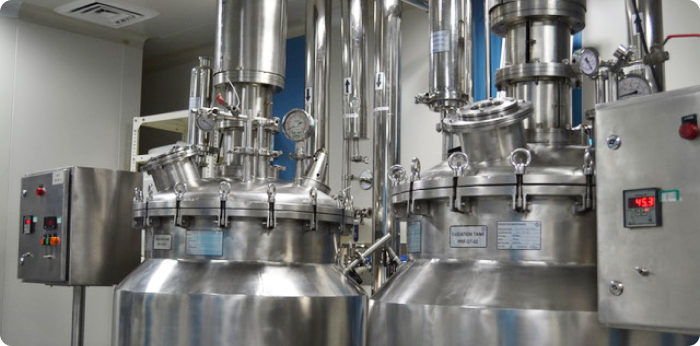
Peptide-based therapeutics are entering the pharmaceutical mainstream, and many companies are grappling with how to scale from bench-scale to commercial supply.
Unlike small-molecule drugs, peptides present unique production challenges, especially when transitioning to multi-kilogram commercial peptide API manufacturing.
This article explores the growing demand for peptide APIs, key challenges in scaling up, and strategies to achieve scalable production while maintaining quality and compliance.
Rising Demand for Peptide APIs and the Need for Scale
The therapeutic peptide market is expanding rapidly, driving an unprecedented need for commercial peptide API manufacturing.
This pipeline growth means companies must be prepared to produce peptide active pharmaceutical ingredients (APIs) in much larger quantities than ever before.
A prime example is the recent boom in GLP-1 agonist peptides (used in diabetes and obesity treatments). These peptide drugs have seen explosive demand, requiring manufacturers to supply multi-kilogram to tonne-scale quantities.
Strategies for Scalable Peptide Synthesis
To overcome scale-up challenges, peptide manufacturers employ a combination of advanced strategies and technologies:
Linear vs. convergent synthesis
Rather than synthesizing a long peptide entirely in one go, developers can use convergent approaches. In convergent synthesis, shorter peptide fragments are made separately and then chemically ligated or coupled to form the full-length peptide.
This strategy improves overall yields and allows purification of easier-to-handle fragments. By breaking the synthesis into manageable pieces, convergent methods reduce the risk of failures and make purification more efficient at scale.
Liquid-phase and hybrid synthesis
While solid-phase synthesis is standard for R&D and small scale, it becomes expensive at large scale due to the resin and solvent requirements. Liquid-phase peptide synthesis (LPPS) assembles peptides in solution instead of on solid support.
Usually, a hybrid approach is used: critical segments made via SPPS are joined in solution, reducing resin use and combining the strengths of both methods. This approach cuts costs and improves scalability.
Process optimization and automation
Achieving reproducibility at scale requires intensive process optimization. Parameters like coupling times, reagent equivalents, mixing speed, and resin loading are fine-tuned to maximize yield and minimize side products.
Many manufacturers utilize automated synthesizers for commercial peptide API manufacturing, enabling precise control over each addition and washing cycle.
Modern large-volume peptide synthesizers enable parallel or continuous coupling cycles, helping to produce multi-kilogram batches by running processes sequentially or in parallel. Automation also reduces human error and allows repetitive tasks to be done efficiently.
In addition, technologies such as microwave-assisted synthesis or continuous-flow SPPS are being explored to accelerate cycle times and potentially improve coupling efficiency at scale.
Enhanced purification techniques
One approach is to use scalable crystallization or precipitation for the final API. If the target peptide can be crystallized from solution, this can replace preparative HPLC entirely, dramatically cutting solvent use and cost.
When chromatography is necessary, continuous purification techniques can improve throughput and allow solvent recycling. High-capacity dynamic axial compression (DAC) columns are also used in modern peptide plants – these large-diameter columns enable purification of bigger batches in a single run.
Green chemistry and waste reduction
Given the extreme volumes of waste generated by classical SPPS, there is a strong drive to make commercial peptide API manufacturing more sustainable.
Process chemists are adopting greener alternatives such as less hazardous coupling reagents, solvent substitutions, and recycling of solvents and reagents.
These innovations not only reduce the environmental footprint but can also lower raw material costs in the long run. Incorporating green chemistry principles early in process development is increasingly seen as part of scaling up responsibly.
Proactive supply chain management
To avoid material shortages, commercial peptide API manufacturers maintain strong relationships with suppliers of amino acids, resins, and other key inputs.
They qualify multiple sources for critical raw materials and sometimes purchase in bulk to ensure safety stock for large campaigns. Vendor audits and quality agreements are crucial, since any variability in raw material quality can wreak havoc in a long peptide synthesis.
Ensuring Quality and Compliance at Scale
Scaling up is not only about throughput and cost; it must be done under the strict lens of quality and regulatory compliance.
Commercial peptide API manufacturing for human use must abide by cGMP conditions, and any commercial-scale process needs to be validated and approved by regulatory authorities.
This imposes several requirements:
● Process validation: This involves process validation batches, where critical parameters and operating ranges are confirmed. Elements like impurity profiles, content uniformity, and batch-to-batch reproducibility are closely examined.
● Analytical rigor: Techniques such as ultra-high performance liquid chromatography (UHPLC), mass spectrometry, capillary electrophoresis, and peptide mapping are employed to ensure the identity and purity of the product.
● Regulatory standards: Commercial peptide API manufacturing facilities must meet the regulatory standards of agencies like the FDA, EMA, etc. This means adhering to ICH guidelines for impurities, residual solvents, and elemental impurities, among others. Facilities often undergo regulatory inspections to verify compliance.
● Quality by design (QbD): By understanding how process parameters affect critical quality attributes, manufacturers build quality into the process rather than testing it in at the end. Risk assessments (FMEAs) are conducted to anticipate what could go wrong at scale, and control strategies are put in place accordingly (such as in-line monitoring or additional purification if needed).
Partnering with a Peptide CDMO for Scalable Supply
Scaling peptide API production to commercial levels is a complex endeavor, but one that can be achieved with the right expertise and infrastructure.
An experienced peptide CDMO brings deep knowledge of synthetic routes, purification technologies, regulatory requirements, and supply chain management specific to peptides.
For example, Neuland Labs is a global CDMO that has emerged as a leader in peptide manufacturing. Neuland offers end-to-end support for scalable CDMO peptide synthesis, from early process development to full GMP commercial production.
The company has invested in a dedicated peptide production facility with state-of-the-art technology. This includes large automated peptide synthesizer systems, 150–300 mm dynamic axial compression chromatography columns, and other advanced equipment to enable multi-kilogram batch manufacturing.
Neuland’s technical team is proficient in solid-phase, liquid-phase, and hybrid peptide synthesis approaches.
As the demand for peptide therapeutics continues to rise, collaborating with Neuland Labs will be instrumental in bringing innovative peptide drugs from conception to commercial peptide API manufacturing.
FAQs
1. What is commercial peptide API manufacturing?
Commercial peptide API manufacturing refers to producing peptide-based active pharmaceutical ingredients at GMP-compliant, multi-kilogram scale, ensuring consistency, purity, and regulatory approval readiness.
2. What are the biggest challenges in scaling peptide APIs?
Key challenges include yield losses in long sequences, high material usage, purification bottlenecks, and maintaining batch-to-batch quality at larger scales.
3. How does scalable peptide synthesis benefit drug developers? Scalable peptide synthesis enables efficient, cost-effective production from lab scale to commercial volumes while meeting quality, purity, and regulatory standards for peptide APIs.
4. Why partner with a CDMO for commercial peptide API manufacturing? A CDMO brings specialized infrastructure, technical expertise, and supply chain readiness to accelerate scale-up while minimizing risks in commercial peptide API manufacturing.
