
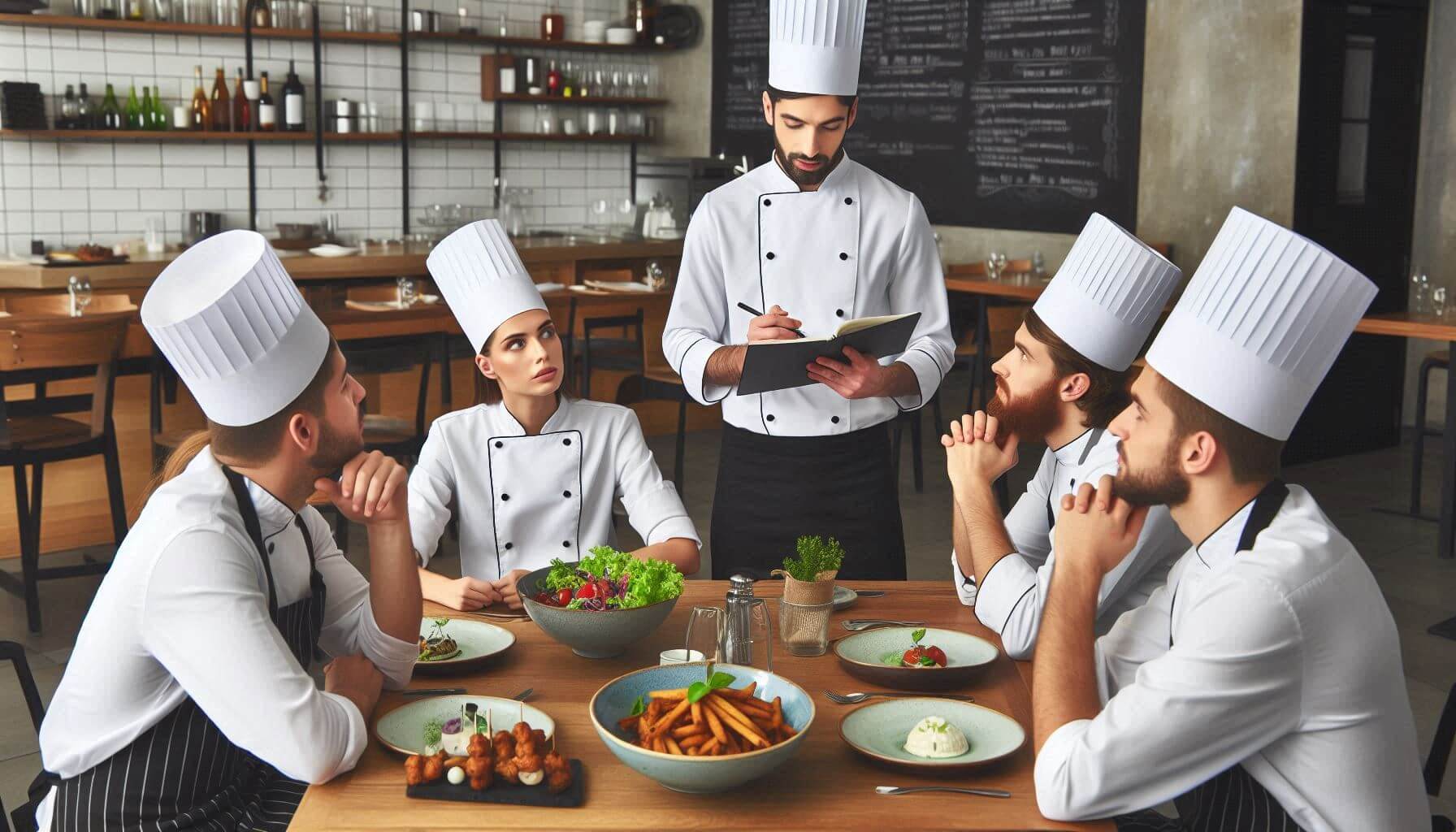
We will explore how kitchen teams transform diverse ingredients into harmonious menus, highlighting the interplay between culinary skill, teamwork, and thoughtful planning. In high-performing kitchens, the final menu is rarely the work of a single individual; it emerges from the combined efforts of a group that communicates, coordinates, and adapts in real time. Every member contributes to refining flavors, textures, and presentations while maintaining a consistent standard across the dining experience.
From selecting the freshest seasonal ingredients to adjusting cooking techniques based on available equipment and staff strengths, cohesion in a fine dining restaurant is achieved through meticulous attention to detail. The process demonstrates that a successful menu is not merely a list of dishes but a reflection of shared vision, innovation, and mutual accountability. Understanding these dynamics reveals how kitchens in a fine dining restaurant create menus that balance creativity with precision, ensuring that every dish meets elevated standards while providing diners with a consistent and memorable culinary experience.
Harmonizing Individual Strengths
In professional kitchens, individual strengths vary widely, yet the goal is always unified execution. Chefs, line cooks, sous-chefs, and prep staff bring unique backgrounds, culinary techniques, and approaches to flavor development. Harmonizing these strengths begins with mutual recognition of each member’s role and capabilities. Team members engage in ongoing dialogue to ensure their individual contributions complement one another rather than compete. For example, when a sous-chef experiments with an innovative cooking technique, line cooks may adjust plating or seasoning to maintain consistency throughout service.
Regular tasting sessions, team meetings, and collaborative preparation exercises reinforce this balance. Harmonization also involves acknowledging limitations, delegating responsibilities, and trusting colleagues to deliver. The kitchen becomes a living system, where every action is interdependent, and the success of the menu relies on both personal skill and the ability to integrate with others. This dynamic fosters a sense of accountability and pride, as each member’s work contributes to the collective outcome.
The Role of Communication in Menu Development
Communication is the foundation of any kitchen that delivers cohesive menus. Beyond simply passing instructions, effective communication involves sharing ideas, clarifying intentions, and anticipating challenges before they arise. In fast-paced environments, verbal cues, gestures, and concise written notes prevent errors that could disrupt the flow of service. Recipe documentation and standardized processes help align team members across shifts and personnel changes, maintaining consistency in preparation and presentation. Importantly, communication extends beyond operational instructions.
Open discussions about flavor pairings, texture balance, and visual appeal allow team members to collectively refine dishes before they reach diners. Feedback, delivered constructively, encourages experimentation and learning, helping to maintain a cycle of improvement. By fostering a culture where ideas can be shared freely and adjustments are welcomed, communication ensures that innovation does not compromise cohesion. The result is a menu that reflects the collaborative input of all team members while maintaining a unified culinary identity.
Balancing Creativity with Practicality
The process of developing a cohesive menu requires a careful balance between creative vision and operational practicality. Kitchens must consider ingredient availability, seasonality, equipment constraints, and staff capacity when conceptualizing new dishes. Creative ideas undergo multiple iterations, with team members testing flavors, cooking methods, and portion sizes to determine what works reliably under service conditions. Collaboration is key in this stage, as each member contributes insights about efficiency, timing, and workflow, ensuring that imaginative dishes are also executable in a busy environment.
This balance prevents menus from becoming overly complex or inconsistent, allowing each dish to complement others while reflecting the kitchen’s identity. By approaching creativity through the lens of teamwork and operational feasibility, kitchens can push culinary boundaries without compromising service quality. Every adjustment made during this process reflects a thoughtful compromise between innovation and consistency, demonstrating that cohesive menus are both inventive and dependable.
Continuous Refinement and Feedback
Cohesive menus are not static; they evolve through continuous refinement driven by observation, experimentation, and feedback. Taste tests, mock service runs, and iterative adjustments allow teams to identify and correct imbalances in flavor, texture, or presentation. Input from servers and diners provides an additional perspective, informing subtle changes that enhance the overall dining experience. Internal critique sessions encourage team members to evaluate each dish objectively, suggest alternatives, and explore more effective plating or preparation techniques.
These sessions reinforce the principle that every member has a responsibility toward the final menu, fostering a sense of shared ownership. Refinement also involves revisiting ingredient sourcing, testing alternative cooking methods, and adjusting timing to enhance cohesion across courses. Over time, these iterative processes result in menus that are dynamic, responsive, and aligned with the kitchen’s vision. By embedding continuous improvement into the workflow, teams cultivate menus that remain harmonious while evolving to reflect changing trends, seasons, and diner preferences.
Through harmonizing individual strengths, prioritizing clear communication, balancing creativity with practical constraints, continuously refining dishes, and fostering a culture of collaboration, kitchens produce menus that delight diners while maintaining consistency. Each dish becomes a reflection of collective effort, careful planning, and shared responsibility. The synergy among team members ensures that innovation and execution coexist seamlessly, resulting in dining experiences that are both imaginative and reliable. Ultimately, cohesive menus are a testament to the power of teamwork, showing that successful culinary creations are born from cooperation, attention to detail, and a unified commitment to quality.
