
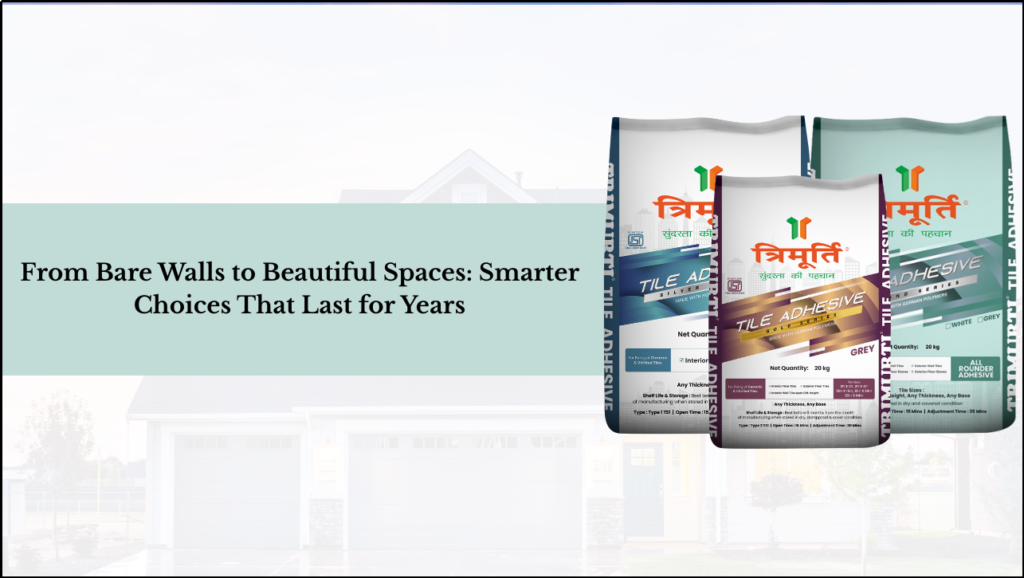
Walk into any newly built or renovated home and the first thing you notice isn’t the furniture, it’s the walls. Smooth finishes, perfectly aligned tiles, and surfaces that quietly hold everything together often depend on choosing the best tile adhesive for walls during construction. What most people don’t realize is that behind that clean look are a few critical material choices that decide whether the space will age gracefully or start showing cracks, loose tiles, and stains far too soon.
This blog is about those invisible heroes of construction and renovation. Not technical jargon, not sales talk, just clear guidance to help you understand what really matters when finishing walls and surfaces, and how the right materials can save you time, money, and stress in the long run.
Why Walls Deserve More Attention Than Floors
Walls are often treated as secondary surfaces. Floors get the spotlight because they take the load, the foot traffic, the wear. But walls carry a different responsibility. They support tiles vertically, face constant exposure to moisture in kitchens and bathrooms, and show imperfections far more clearly under natural light.
A weak bonding material or poor surface preparation on a wall doesn’t just look bad—it can become unsafe. Tiles slipping, edges lifting, or hairline cracks spreading are not cosmetic issues; they are warning signs.
That’s why wall-specific materials exist and why choosing them carefully makes a noticeable difference.
The Hidden Science Behind Tile Bonding
When tiles are installed on walls, gravity works against them every day. Unlike floors, there’s no natural pressure pushing tiles into place. The adhesive has to do all the work: grip, hold, and stay stable across seasons.
This is where many projects fail. Using generic cement or floor-grade products on walls often leads to long-term problems.
Choosing the best tile adhesive for walls isn’t about brand hype; it’s about understanding performance. Wall-grade adhesives are formulated for higher tack, controlled slip, and better flexibility. They hold tiles in place from the moment they’re applied and continue performing even when temperature and humidity change.
Used correctly, they make installation smoother for workers and results more reliable for homeowners.
What Makes Tile Adhesives a Better Choice Than Traditional Cement
For years, tiles were fixed using cement and sand mixes. It worked—sometimes. But modern construction demands consistency, speed, and durability that traditional mixes struggle to deliver.
Here’s where tile adhesive benefits become clear:
- Stronger grip: Designed for better bonding, especially on vertical surfaces
- Uniform quality: Factory-made blends ensure consistent results
- Reduced tile breakage: Flexible bonding absorbs minor structural movement
- Cleaner application: Less mess, less wastage, and better coverage
These advantages don’t just help professionals—they protect homeowners from expensive repairs later.
Surface Preparation: The Step Everyone Rushes (and Regrets)
Even the strongest adhesive can fail if the surface underneath isn’t prepared properly. Dust, uneven plaster, moisture, or poor finishing can weaken bonding before installation even begins.
This is where wall putty quietly plays a starring role.
A high-quality putty creates a smooth, level base that improves adhesion and enhances the final look of tiles or paint. In Indian conditions where humidity, heat, and varied construction practices are common, choosing the best putty in India is less about price and more about performance under real-world conditions.
Good putty resists moisture, prevents cracks, and helps surfaces stay intact for years.
How Climate Influences Your Material Choices
India’s climate is not forgiving. Coastal humidity, dry northern heat, heavy monsoons, and sudden temperature shifts all affect building materials.
Walls in bathrooms face constant moisture. Kitchen backsplashes deal with heat and grease. Exterior-facing walls expand and contract daily.
That’s why compatibility matters. Adhesives and putties must work together, not against each other. When materials are designed to handle movement and moisture, they reduce stress on tiles and finishes, keeping walls intact even in challenging environments.
Common Mistakes That Shorten Wall Life
Many wall issues aren’t caused by poor materials but by poor decisions.
Some of the most frequent mistakes include:
- Using floor adhesives on walls
- Skipping surface leveling to save time
- Over-watering adhesives during mixing
- Ignoring curing time before grouting
- Choosing products based only on cost
Each shortcut may save a little money upfront but often leads to repairs that cost far more later.
The Long-Term Payoff of Doing It Right Once
When walls are finished with the right materials, the benefits aren’t always visible but they are felt.
Tiles stay aligned. Cracks don’t appear after one monsoon. Paint finishes look smooth longer. Maintenance becomes minimal. And most importantly, you don’t worry about things coming loose behind the scenes.
Construction quality isn’t about luxury, it’s about peace of mind.
A Simple Rule for Smarter Wall Finishing
If there’s one takeaway from all of this, it’s this: walls demand materials made specifically for walls. Whether it’s adhesives that fight gravity or putty that stabilizes the surface beneath, purpose-built products consistently outperform general solutions.
Good walls don’t just support tiles and paint, they support the life happening inside the space. Investing in the right materials early also means fewer repairs, lower maintenance costs, and a home that continues to look finished and reliable over time.
Conclusion
Walls tell the story of a space long after construction is finished. Smooth finishes, firmly bonded tiles, and durable surfaces don’t happen by accident, they’re the result of informed choices made early in the process. When the right materials are selected from the start, walls are better equipped to handle daily wear, moisture, and natural structural movement without losing their appearance or strength. This is where understanding tile adhesive benefits becomes important, as quality adhesives improve bonding, reduce long-term maintenance, and help surfaces retain their finish for years, even in demanding environments.
If you’re planning a new build or renovation, focusing on the quality of wall materials is one of the smartest investments you can make. Brands like Trimurti Products have built their reputation around developing reliable construction solutions designed for real-world Indian conditions making it easier to build walls that look good today and stay strong for years to come.
