
Alarms and reminders are useful because they attract attention, but they can also interrupt everyone within hearing distance. A phone ringing early in the morning may wake a partner. A loud notification in a library can distract several people. Repeated reminders during work can disturb colleagues who have nothing to do with the alert.
Vibration alarm bands offer a more personal alternative. Instead of projecting sound into the surrounding environment, they deliver a physical signal to the wearer’s wrist. This makes them suitable for people who share bedrooms, workspaces, accommodation, or quiet public settings.
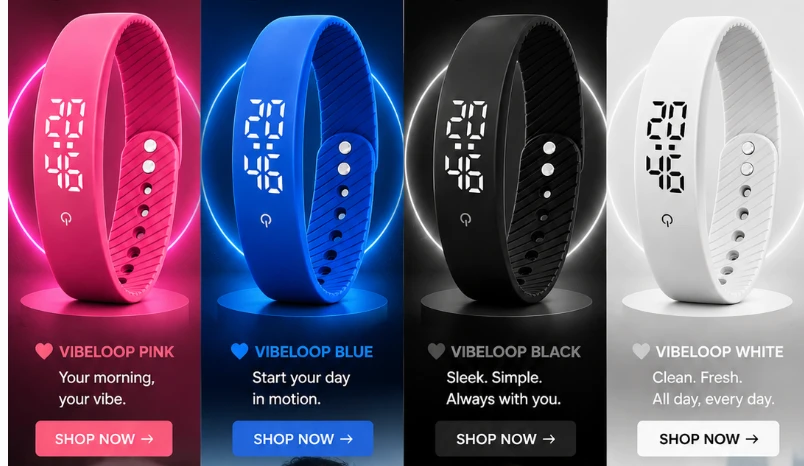
Products based on VIBE LOOP wearable technology combine vibration alarms with step tracking and comfortable everyday wear. Their main advantage is not simply that they are quieter than conventional alarms. It is that they direct the alert toward the person who needs it while reducing unnecessary disruption for others.
Why Audible Alarms Affect More Than One Person
A traditional alarm works by creating a sound that is difficult to ignore. Although the alert may be intended for one individual, it does not recognize personal boundaries. Anyone nearby can hear it.
This becomes an issue when people follow different schedules. One person may wake early for work while a partner begins the day later. A student may have a morning class while a roommate has no reason to wake up. Parents may want to exercise or prepare breakfast before their children get out of bed.
Phone alarms can make the situation more disruptive because users often select loud tones and repeat the alert several times. A phone may also be placed on a hard surface, causing vibrations to travel through a bedside table in addition to producing sound.
A wrist-based alarm changes the direction of the alert. The vibration begins against the wearer’s skin, making it more private and less likely to fill the room.
Supporting Couples With Different Morning Schedules
Different waking times are common among couples. Work shifts, commuting requirements, exercise plans, and personal responsibilities can create schedules that begin hours apart.
A vibration band allows the earlier riser to receive an alert without placing a ringing clock beside the bed. The wearer can switch off the vibration, leave the room quietly, and begin the morning routine elsewhere.
This does not guarantee that the other person will remain asleep. Movement, lights, doors, and ordinary household sounds may still cause disturbance. However, removing a loud or repeated alarm can reduce one of the most avoidable interruptions.
The band should fit securely enough for the vibration to be noticeable. If it is excessively loose, it may shift during sleep or produce a weaker sensation. If it is too tight, it may become uncomfortable. Testing the fit and vibration before the first overnight use is important.
Helping Parents Preserve a Quiet Household
Parents often use the early morning for tasks that are easier to complete while children are sleeping. They may prepare meals, organize school items, exercise, work, or simply enjoy a short quiet period.
An audible alarm can wake children earlier than intended, changing the schedule for the entire household. A vibration alarm delivers a more focused alert and may help the wearer get up without immediately introducing noise.
The same principle can be useful when a baby, elderly relative, or light sleeper is resting nearby. A quiet wrist alert supports the wearer’s schedule while showing consideration for other household members.
A consumer vibration band should not be treated as a medical alert, emergency device, or caregiving monitor. Its purpose is to provide ordinary alarms and personal reminders. Any critical care arrangement should use appropriate professional equipment and guidance.
A Considerate Option for Shared Student Accommodation
Students living in dormitories or shared rooms may have very different timetables. One roommate may attend an early lecture, while another studies late and needs additional sleep.
A vibration alarm band can reduce conflict caused by repeated morning alarms. It allows the wearer to wake through a physical wrist alert instead of choosing a tone loud enough to reach across the room.
This is especially useful when several people share a sleeping area. If each person depends on a phone alarm, the room may be interrupted multiple times every morning. Private vibration alerts provide a more considerate approach.
Students can also use vibration alarms as study reminders. A band might signal the end of a focused work period or remind the wearer to leave for class. In a library, this is less disruptive than an audible timer.
The reminder should be set thoughtfully. Too many alerts can become distracting even when they are silent, particularly if the wearer responds by repeatedly checking the device.
Quiet Waking During Travel
Travel often places people in unfamiliar or shared sleeping environments. Hostels, group tours, shared hotel rooms, overnight trains, and family visits may require one traveler to wake without disturbing others.
A vibration alarm band is compact and stays on the wrist, so the traveler does not need to place a phone beside the bed at full volume. This can be helpful for early departures, planned walks, or changing schedules.
Time zones require special attention. The wearer should confirm that the band displays the correct local time and that the alarm is scheduled for the intended day. The battery should also be checked before sleeping.
For an important flight, train, or appointment, relying on one alarm may be risky. A backup can be scheduled a few minutes later. If the vibration wakes the traveler successfully, the backup can be disabled before it makes a sound.
Keeping the charging cable with other essential travel accessories can help ensure that the band remains ready throughout the journey.
Discreet Reminders in the Workplace
Avoiding disruption is not only a nighttime concern. Audible notifications can interrupt meetings, concentration, conversations, and shared working areas.
A vibration alarm band can provide a private reminder to take a planned break, begin a task, leave for an appointment, or move after a long period of sitting. The wrist-based alert attracts the wearer’s attention without requiring a phone to play a sound.
This can be useful in open-plan offices, libraries, classrooms, studios, and other places where quiet is valued. The band allows a reminder to remain personal.
Users should still avoid setting unnecessary alarms. Frequent wrist vibrations can interrupt concentration and may lead to constant device checking. A few carefully selected reminders are generally more useful than alerts scheduled throughout the entire day.
The aim is to support organization without replacing one form of distraction with another.
Step Tracking Adds Daytime Value
Once the morning alarm has served its purpose, the band can continue supporting the wearer through step tracking and general movement monitoring.
This function makes walking during work, travel, errands, and exercise more visible. Users may notice how different routines affect their activity and identify opportunities to move more often.
Step totals should be treated as estimates rather than clinical measurements. Wrist movement, walking style, fit, and device design may influence the count. The greatest value comes from observing personal patterns over time.
A wearer might compare working from home with commuting, or notice whether a short lunch walk changes the day’s movement. These observations can support realistic habits without requiring intense training.
By combining a private alarm with daytime activity tracking, the band remains useful beyond the quiet moments in which it first attracts attention.
Setting Up a Reliable Personal Alarm
A vibration alarm must be prepared correctly to work as intended. A short setup routine can reduce errors and help the wearer trust the device.
Before relying on the band, users should:
- Charge it sufficiently
- Set the correct time and day
- Test the vibration while awake
- Adjust the strap for comfortable contact
- Learn how to dismiss the alarm
- Disable old alarms that are no longer needed
- Use a backup for critical commitments
People respond differently to vibrations. Some wake easily, while others may need a stronger or repeated alert. Testing is therefore more useful than assuming the band will work in exactly the same way for everyone.
The band should also remain comfortable during sleep. If the strap causes irritation or leaves deep marks, the wearer should adjust or remove it rather than ignoring the discomfort.

Several practical factors influence whether a vibration band will fit naturally into daily life. Buyers should consider weight, strap material, adjustability, display size, controls, alarm options, charging method, and overall comfort.
A compact design may feel less noticeable during sleep and fit more easily beneath sleeves. Silicone straps can be flexible and easy to clean, while woven options may provide a different texture and appearance.
Color is another personal consideration. Black, white, and blue can blend with many outfits, while pink, purple, coral orange, royal blue, and yellow-green offer more visible choices.
People who want to compare wearable options can explore quiet alarm fitness bans and review which features suit their sleeping arrangements and daytime routines.
Respecting Shared Spaces Through Better Habits
A vibration band reduces audible disruption, but considerate behavior still matters. The wearer should prepare clothing and belongings outside the bedroom when possible, keep lights low, and avoid repeated movement through shared sleeping areas.
In workplaces and libraries, a silent alert should not lead to loud conversations or unnecessary phone use. The device provides a private signal, but the response should also respect the environment.
Technology works best when it supports thoughtful habits. A vibration alarm is one part of a quieter routine rather than a complete solution on its own.
Where Digital Watches Fit
Digital and smart watches may also offer vibration alarms, activity monitoring, touchscreen operation, and Bluetooth connectivity. Their larger displays can make alarm settings and activity information easier to read.
These watches may appeal to users who want a broader range of digital functions from one wearable. A larger interface can be convenient during the day, particularly for people who prefer to view more information directly on the wrist.
However, a full-size smart watch may feel more noticeable during sleep than a compact fitness band. Additional functions can also require more setup, interaction, and charging attention.
A VIBE LOOP Ban may be the more focused option for someone whose priorities are quiet waking, discreet reminders, step tracking, and lightweight wear. A digital watch may suit a user who wants a larger display and expanded connected features.
Both formats can help reduce audible interruptions when their vibration settings are used responsibly.
A More Personal Way to Receive Everyday Alerts
Many alarms are intended for one person but heard by everyone nearby. Vibration bands offer a simple way to make waking and routine reminders more personal.
They can support couples with different schedules, parents protecting quiet mornings, students sharing rooms, travelers staying near others, and professionals working in quiet environments. Step tracking adds value during the rest of the day, helping the band remain relevant after the alarm has ended.
Digital watches provide a larger and more connected alternative, but compact VIBE LOOP Bans keep the emphasis on private alerts, comfort, and straightforward daily use.
A quieter alarm may seem like a small change. In a shared space, however, it can become a practical expression of consideration for the people nearby.
