
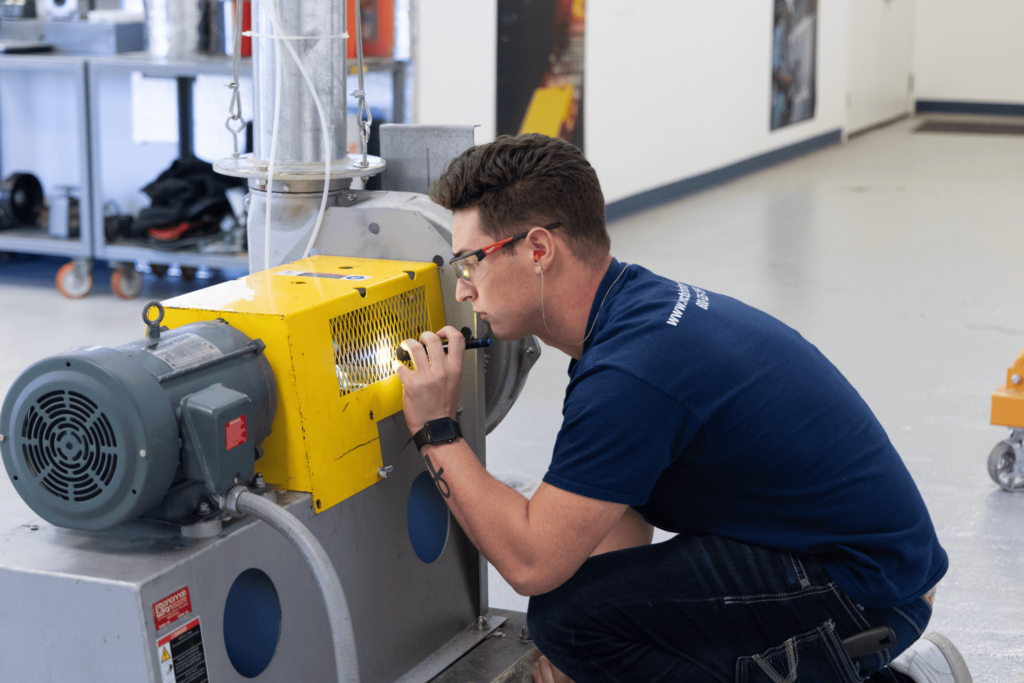
Today’s industrial sectors utilize machines that function all day and night in extreme conditions. Any failure is bound to cause problems such as scheduling troubles, higher maintenance costs, and ultimately reduced profits. The use of real-time vibration data can help in determining the state of the machinery, thus making it possible for the maintenance crew to identify any emerging problem early enough.
Early Detection Prevents Costly Equipment Failures
Real-time vibration measurement will detect any slight differences in machinery behavior much earlier than the appearance of physical signs. Machinery parts like bearings, shafts, gears, and motors have natural vibrational behavior during working. Deviation from the usual vibrations will always mean some wear, imbalance, loose components, or alignment errors. With continuous measurement, it is possible to start diagnosing any problems without waiting for scheduled checks. Early detection will help reduce the amount of subsequent damage and reduce repair costs. It will also save you from any unexpected stops in your production process. This proactive approach also supports better maintenance planning because repairs can be scheduled during convenient maintenance windows rather than emergency shutdowns.
Condition Monitoring Improves Equipment Life
Condition monitoring has become an essential pillar of maintenance since it offers continual insight into the performance of machinery. Rather than carrying out scheduled maintenance based on a calendar system, organizations can base their maintenance schedule on the actual performance conditions of the machines. This approach reduces unnecessary part replacements while ensuring that deteriorating components receive attention before failure occurs. Businesses that invest in dependable remote vibration analysis solutions gain access to expert evaluations, timely alerts, and detailed performance trends without requiring constant on-site inspections. As a result, maintenance resources are allocated more effectively, equipment remains in better operating condition, and overall asset life is significantly extended.
Data-Driven Maintenance Enhances Operational Efficiency
Maintenance decisions that involve real-time vibration data are more precise than those made on assumptions or on schedule. By looking at past vibration trends, it will be known whether machines are working in their normal state or slowly building up problems due to wear and tear. Current results can be compared to previous performances so engineers will know how urgent the need for maintenance is. It will help eliminate unnecessary maintenance jobs while making sure that machines that need attention are prioritized. Labor, spare parts usage, and availability of machinery will all be optimized. The result is a more efficient maintenance program that supports consistent production performance across the entire facility.
Reduced Downtime Strengthens Productivity
Unexpected equipment malfunctions usually lead to a domino effect that influences production goals, deliveries, and costs. Real-time vibration detection decreases the risk of this happening since it offers an instantaneous warning whenever something unusual occurs. Maintenance crews can react promptly before an insignificant problem evolves into a full-scale malfunction of the whole system. Maintenance efforts are better planned and require fewer urgent fixes, which minimizes the need for overtime and disturbances in the production process. Enhanced reliability of equipment makes employees more efficient since they are not dealing with equipment failures all the time. Consistent machine performance contributes to smoother workflows and greater confidence in production schedules.
Long-Term Asset Performance Supports Sustainable Operations
Increased equipment lifespan not only provides economic and environmental advantages through better maintenance but also through other factors. Equipment that is working well needs fewer parts replaced, consumes fewer materials, and produces less waste. Live machine vibrations give the opportunity to constantly improve the machine performance by analyzing the problems that arise and need certain changes either in the design of the equipment or in its operation. The maintenance staff can use these observations to enhance their approaches to the reliability of the equipment and make better decisions concerning their future purchases. This long-term perspective helps maximize asset value while supporting sustainable manufacturing practices and improved operational resilience.
Vibration data in real-time has made maintenance a proactive approach rather than a reactive one by producing tangible outcomes. The following factors, such as early fault detection, condition-based maintenance, enhanced planning, minimized downtime, and increased asset efficiency, have led to higher reliability levels. Firms that adopt vibration analysis continuously are well-equipped to safeguard valuable assets, improve maintenance planning, and ensure high efficiency and extended equipment lifetime.
