
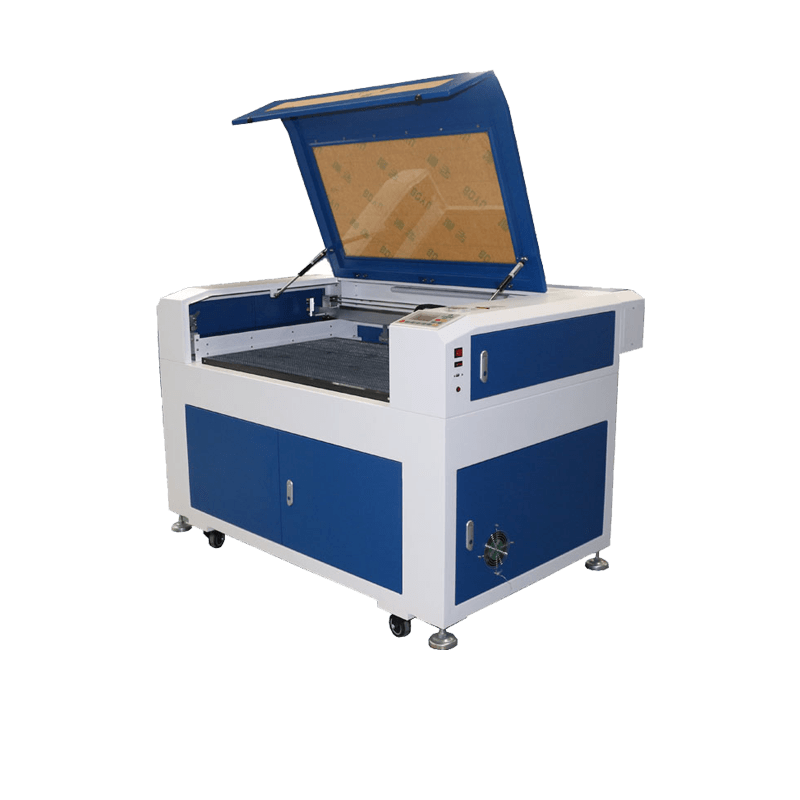
It is tempting to begin the evaluation with brand reputation. Some manufacturers are well known, and their names carry weight. But the right machine for your shop is not necessarily the one with the most recognizable logo. It is the one that matches your materials, your production volume, and your budget.
Begin by defining what you actually cut. A shop that cuts 3 mm acrylic for signage has different requirements than a shop that cuts 20 mm plywood for furniture or a business that cuts leather for upholstery. The material determines the power required, the bed size needed, and the extraction and cooling systems that must be specified.
Next, define your production volume. A hobbyist cutting a few pieces per week needs a very different machine from a commercial shop running two shifts per day. Volume determines whether you need a basic machine with manual material handling or a production system with automated feeding and higher power.
Finally, define your quality standard. If your parts require tight tolerances, polished acrylic edges, and consistent repeatability, you need a machine with a rigid motion system and precise optics. If your work is less demanding, you may be able to save money with a simpler configuration.
The Laser Tube Question
The laser tube is the most important consumable in any CO2 laser cutting machine. It degrades over time and loses power, eventually requiring replacement. The cost and lifespan of the tube vary widely between manufacturers, and this variation can dramatically affect the total cost of ownership over the life of the machine.
Some manufacturers build their own tubes and control quality tightly. Others source tubes from third-party suppliers, which can lead to variability in performance and lifespan. Ask the manufacturer directly about tube lifespan, replacement cost, and availability. If the tubes are imported and take weeks to arrive, that downtime affects your production. If the tubes are expensive relative to the machine price, your operating costs will be higher than expected.
A cheap machine with expensive, short-lived tubes may cost more over five years than a more expensive machine with affordable, long-lasting tubes. Running that calculation before purchase is essential.
Motion System and Cutting Quality
The motion system determines how precisely and quickly the beam moves across the material, and it directly affects the quality of the cut. Belt-driven systems are common in entry-level machines and are adequate for many applications, but belts can stretch over time and lose accuracy. Rack-and-pinion systems are more rigid and precise and are found in mid-range and high-end machines. Linear motor systems offer the highest speed and accuracy but come at a premium.
The quality of the guide rails and bearings also matters. A machine with cheap bearings will develop play over time, leading to inconsistent cuts and increased maintenance. A machine with high-quality bearings will hold its accuracy for years.
For buyers, the practical question is whether the motion system is adequate for the work. A shop cutting thin acrylic at moderate speeds may be well served by a belt-driven machine. A shop cutting thick material at high speeds or requiring tight tolerances should look for a more robust system.
Software and Usability
The control software determines how easily the machine can be programmed and operated. Some manufacturers provide comprehensive software suites that include design, nesting, and machine control in one package. Others provide basic drivers that require third-party software.
Good software reduces training time and increases productivity. It supports common file formats, provides intuitive controls, and includes nesting capabilities that optimize material usage. Poor software frustrates operators and limits the machine’s potential.
Ask the manufacturer for a demonstration of the software. If possible, test it with files you actually use in your production. The software should feel intuitive and capable, not like an obstacle to getting work done.
Service, Support, and Spare Parts
A CO2 laser cutting machine requires maintenance and occasional repair. The manufacturer’s service and support capabilities determine how quickly problems are resolved and how much downtime you experience.
Consider the availability of local service technicians. A manufacturer with a regional service network can respond quickly to issues. One without may require you to ship the machine or wait for a technician to travel from another country.
Consider the availability of spare parts. Belts, bearings, mirrors, lenses, and tubes all wear over time. A manufacturer with local parts inventory can ship replacements quickly. One without leaves you waiting.
Consider the manufacturer’s responsiveness. Ask for references from existing customers and contact them directly. Their experience with the manufacturer’s support will tell you more than any brochure.
The Bottom Line
Evaluating a CO2 laser cutting machine manufacturer is a process, not a single decision. It involves defining your requirements, understanding the technology, asking hard questions, and verifying claims through references and demonstrations. Manufacturers that welcome this scrutiny are usually the ones worth working with. Those that resist it are usually the ones to avoid.
A CO2 laser cutting machine is a significant investment. Choosing the right manufacturer is what ensures that investment pays off.
