
The dining area is often described as the heart of the home, and for good reason. It is where family members gather after long days, where friends linger over conversation, and where holiday memories are built one shared meal at a time. Because this space carries so much meaning, the furniture chosen for it deserves careful thought rather than a rushed decision. Finding the right dining table set is less about following the latest trend and more about understanding how you live, entertain, and move through your home. This practical walkthrough is designed to help you approach the process with clarity, breaking down each stage into manageable steps. From measuring your room and choosing a shape, to considering materials, seating, style, and long-term care, every section builds on the last. By the time you reach the final step, you will have a clear framework for selecting a set that suits your household and stands up to years of everyday use.
Step One: Measure the Room and Map the Flow
Before you look at a single catalog or showroom piece, take out a tape measure and record the exact dimensions of the space where the table will live. Note the length and width of the room, the position of doors, windows, and radiators, and any built-in features such as buffets or wall paneling. Once you have those numbers, mark out the intended footprint of the table with painter’s tape on the floor. Walk around it, pull imaginary chairs out, and picture someone carrying serving dishes past. The general rule is to leave enough clearance behind each chair so a seated guest can rise comfortably without bumping into a wall or another piece of furniture. If your dining area doubles as a walkway between rooms, that clearance becomes even more important. This early mapping exercise prevents the most common regret in dining room design, which is choosing a beautiful dining table set that dwarfs its surroundings and disrupts everyday movement.
Step Two: Decide on Shape and Seating Capacity
With the room’s dimensions in hand, the next step is to choose a shape that complements both the space and the way you host. Rectangular tables remain the most popular choice for a reason. They align well with long, narrow rooms and can be pushed against a wall for casual meals or pulled out for larger gatherings. Round tables encourage conversation because everyone sits within an easy sightline of one another, making them ideal for smaller households or intimate dinner parties. Oval shapes offer a middle path, seating more guests than a round table while feeling softer than a strict rectangle. Square tables suit compact rooms and give a balanced, symmetrical look. Consider not only your daily seating needs but also the occasional larger gathering. Extendable options are especially useful for households that expand on holidays, because they let you stay compact day to day while still welcoming a crowd when needed.
Step Three: Examine the Materials Honestly
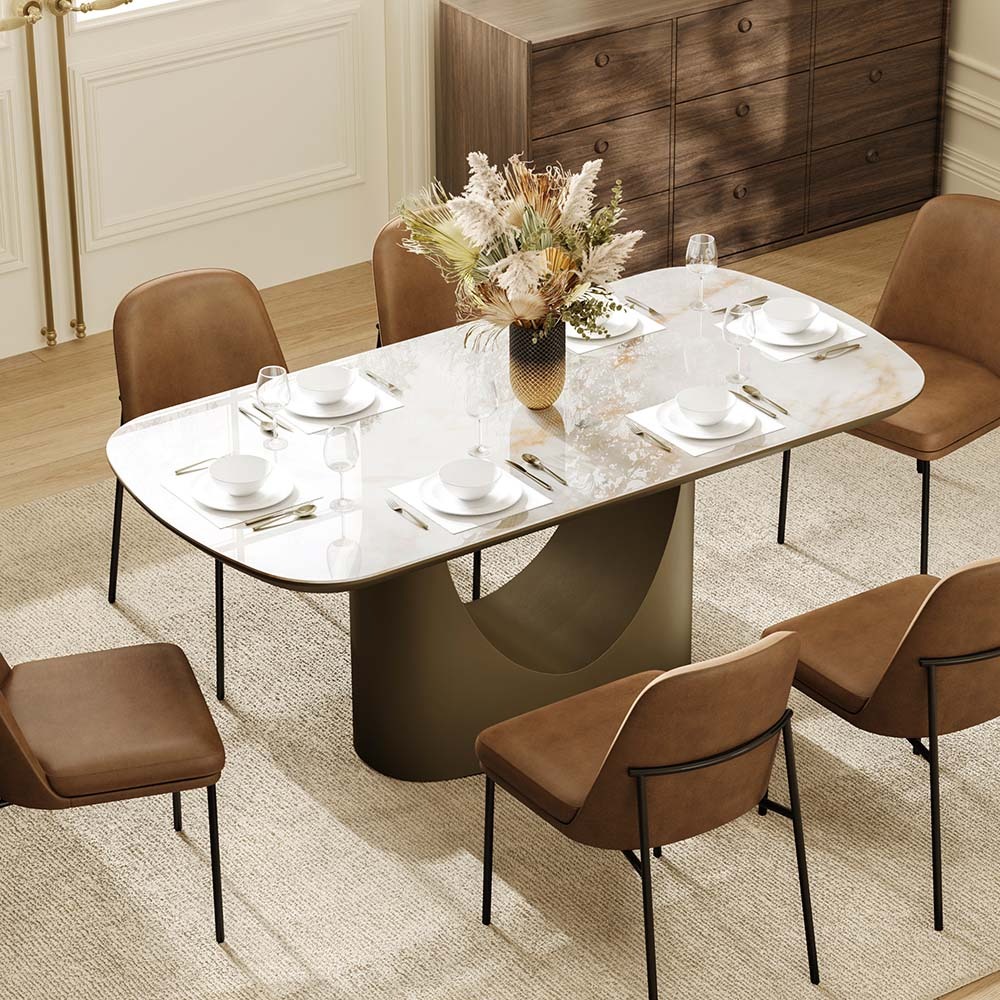
Material selection is where practicality meets personality. Solid wood tables bring warmth and character, developing a patina that many owners come to love over time. They do, however, respond to changes in humidity and can show scratches or rings if not protected. Sintered stone and marble surfaces have grown popular for their striking veining and their resistance to heat, moisture, and everyday wear. They tend to feel cool and substantial, giving a room a grounded, architectural quality. Engineered wood and veneers are budget-friendly and stable, though their long-term durability depends heavily on the quality of construction beneath the surface. Glass tops keep a room feeling open and airy, though they require regular polishing to stay clear. When you evaluate a material, think about your household honestly. If children do homework at the table or if you host frequent dinners with red wine, a forgiving stone surface may serve you better than a delicate finish.
Step Four: Pair the Table with the Right Chairs
A table is only half of the equation. The chairs you pair with it influence comfort, style, and how often the space actually gets used. Start with seat height and clearance, ensuring there is enough room between the chair seat and the underside of the tabletop for legs to slide in easily. Consider the chair’s footprint as well, since bulky arms can prevent chairs from tucking neatly under the table. Upholstered chairs add softness and encourage lingering conversation, but they call for fabrics that can handle occasional spills. Wooden or metal chairs are easier to wipe down and often feel more casual. Mixing styles is a growing trend, with benches on one side and individual chairs on the other, or a pair of statement chairs at the heads of the table. Whatever combination you choose, sit in the chairs before committing. Comfort matters more than any photograph can convey.
Step Five: Match Style to the Rest of Your Home
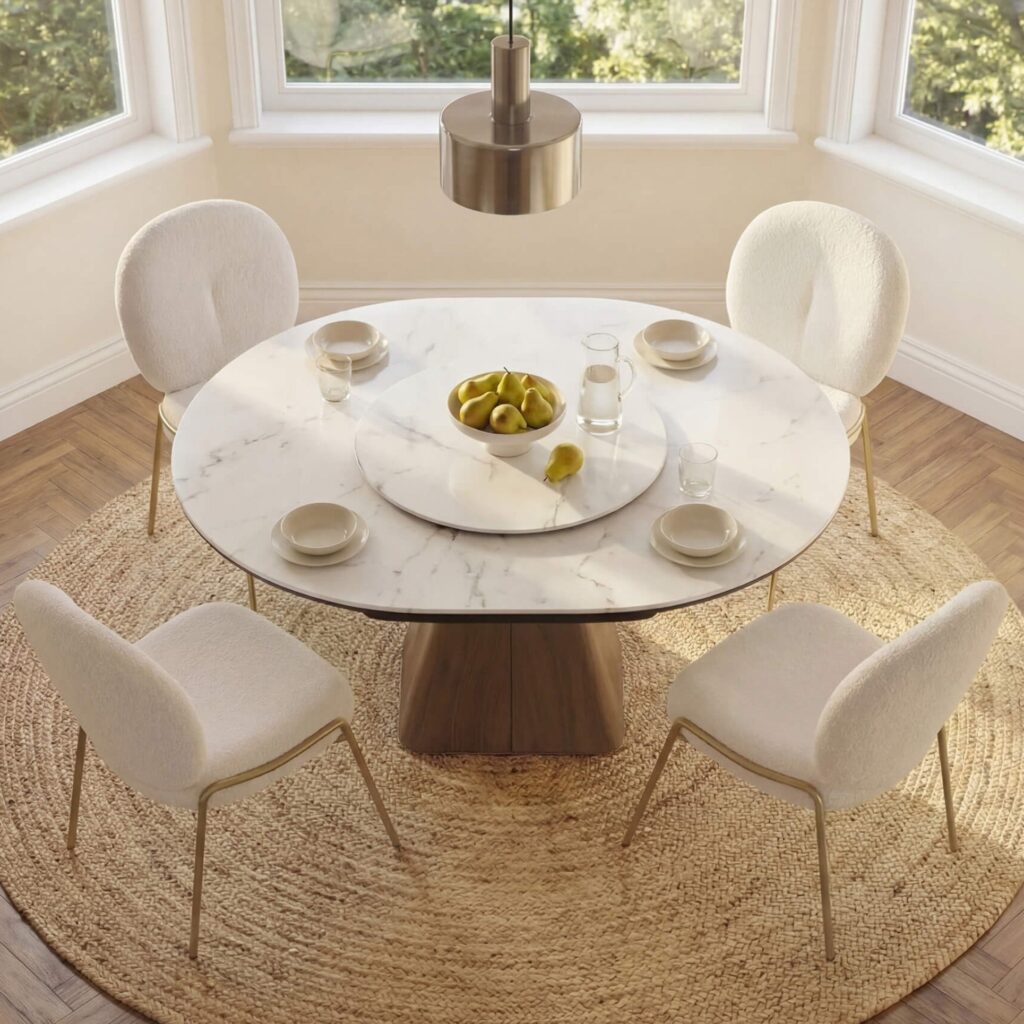
A dining set does not exist in isolation. It shares sightlines with your living area, kitchen, and hallway, so its style should feel like a natural continuation of the rooms around it. Modern homes tend to favor clean lines, slim profiles, and mixed materials such as stone tops paired with metal or lightly finished wood bases. Traditional interiors welcome carved details, richer wood tones, and upholstered chairs with tailored silhouettes. Transitional spaces borrow from both, softening contemporary shapes with warmer finishes. If your home leans toward a coastal, farmhouse, or Japandi aesthetic, look for pieces that echo those cues without turning the room into a theme. Brands such as CHITA LIVING often present dining collections that balance sculptural design with everyday practicality, which can be a helpful reference point when you are trying to picture how a piece will feel in a lived-in room rather than a styled photograph.
Step Six: Plan for Lighting, Rugs, and Layering
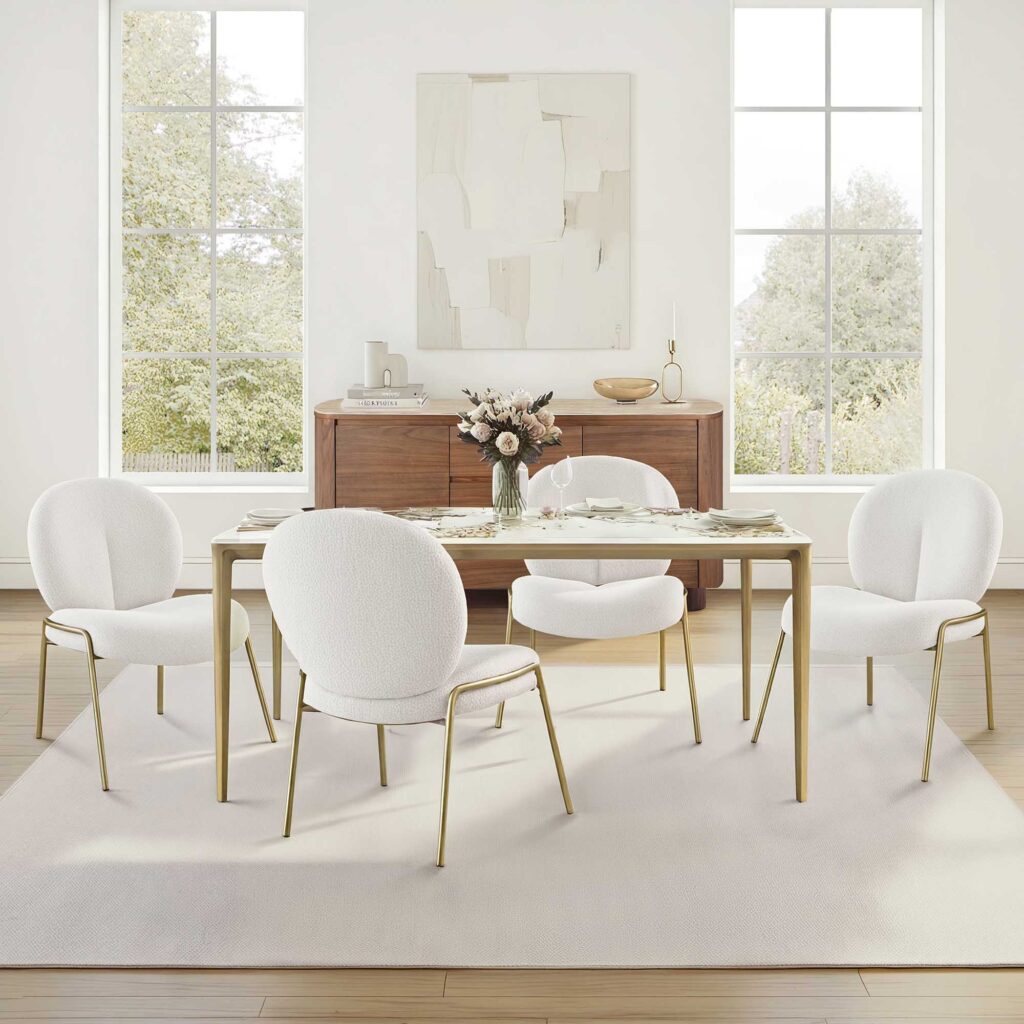
Once the table and chairs are settled, turn your attention to the elements that frame them. A pendant or chandelier centered over the table anchors the room and creates a sense of occasion at every meal. Aim for a fixture that is proportionate to the tabletop, neither so small it disappears nor so large it dominates. A rug beneath the set defines the zone and softens sound, but it must be sized so all chairs remain on the rug even when pulled out. Low-pile or flatweave rugs work best because they let chairs glide smoothly. Consider adding a sideboard or console nearby for serving pieces, linens, and everyday storage. These supporting layers do more than decorate. They make hosting easier and help the room transition gracefully from breakfast to dinner party.
Step Seven: Care, Maintenance, and Longevity
The final step in the buying journey is one that continues long after delivery. Every material has its own care rhythm, and understanding it before purchase helps you protect your investment. Wood surfaces benefit from coasters, felt pads, and occasional conditioning to keep the grain healthy. Sintered stone and marble should be wiped promptly after spills, particularly with acidic foods, and cleaned with pH-neutral products rather than harsh sprays. Chairs need periodic checks to tighten any loosened joinery, and upholstery should be rotated or vacuumed to prevent uneven wear. Thoughtful maintenance is what separates a set that looks tired within a few seasons from one that grows more beautiful with use. When you view your dining furniture as a long-term companion rather than a short-term purchase, the small daily habits of care start to feel less like chores and more like the quiet upkeep of a space you truly love.
Bringing It All Together at Your Table
Choosing a dining set is a layered decision, but it becomes far less overwhelming when you approach it as a series of manageable steps. By starting with measurements, moving through shape, materials, chairs, style, layering, and care, you build a decision rooted in how you actually live rather than in fleeting inspiration. The right set feels balanced within the room, comfortable for long meals, and adaptable enough to grow with your household. Whether you gravitate toward the sculptural warmth of wood or the cool sophistication of stone, the process is the same, and thoughtful attention at each stage pays off for years. Take your time, sit in the chairs, run your hand across the surfaces, and picture the meals ahead. When every element is chosen with intention, the finished dining space becomes more than furniture. It becomes the gathering place your home has been waiting for.
