
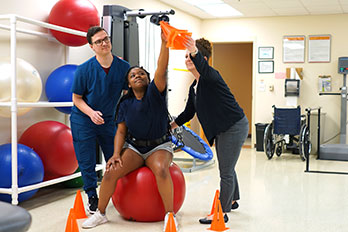
An ota program is often the first real step into a healthcare career that focuses on helping people regain independence.
When I first considered this path, I was excited but also unsure about what daily life in training would actually look like.
That mix of curiosity and doubt is something most people feel at the beginning.
This journey is not just about passing exams.
It is about learning how to support people through recovery, adaptation, and everyday challenges.
Understanding that early can change how you approach your training.
Understanding the role before you start
Before you even begin, it helps to picture your future role clearly.
An occupational therapy assistant works closely with licensed therapists to support patients in daily living activities.
This can include helping someone relearn how to dress, cook, or move safely after an injury.
I once shadowed a clinic where a patient was learning to use adaptive tools after a stroke.
Watching that moment when they successfully held a spoon again made everything feel meaningful.
That is the kind of real-world impact this career offers, which is why many people explore a structured ota program to build the skills needed for this role.
The first few weeks feel fast and intense
The first few weeks can feel like a lot all at once.
You are introduced to new terms, concepts, and expectations in a short time.
At first, everything may seem unfamiliar.
I remember sitting in my first anatomy class and feeling completely lost.
There were so many terms to remember, and it felt overwhelming.
But with repetition and practice, things slowly started to make sense.
You will also begin practicing skills early.
This is where learning becomes more hands-on and engaging.
It helps connect what you read in books to real-world situations.
What you will study during training
Most occupational therapy assistant training programs follow a clear structure.
You begin with the basics and gradually move into more applied learning.
Core subjects you will cover
You can expect to study topics such as.
Human anatomy and body systems.
Medical language used in healthcare.
Rehabilitation techniques.
Mental health support.
Therapeutic activities.
These subjects form the foundation for your clinical work.
Hands-on learning experiences
Practical training is a key part of the process.
You will practice working with patients in a controlled environment before entering real settings.
I remember practicing transfer techniques with classmates.
At first, it felt awkward trying to follow each step correctly.
Over time, those movements became natural and confident.
Clinical experience changes everything
One of the most important parts of your training is clinical placement.
This is where you apply everything you have learned.
You will work in real healthcare environments under supervision.
Your first day can feel nerve-wracking.
You might worry about making mistakes or saying the wrong thing.
But supervisors guide you, and patients are often more understanding than you expect.
I still remember my first patient interaction.
I was nervous, but the patient smiled and made the situation easier.
That experience helped me realize that compassion matters more than perfection.
Managing your time becomes essential
Balancing classes, assignments, and personal life can be challenging.
Time management quickly becomes one of your most important skills.
Creating a simple schedule can help you stay on track.
Breaking tasks into smaller steps makes everything feel more manageable.
During my training, I learned the hard way that procrastination leads to stress.
Once I started reviewing material daily, things became much easier.
Emotional growth is part of the journey
This path is not just academic.
It also involves emotional learning.
You will meet people who are facing real challenges in their lives.
Some days will feel heavy.
You might see patients struggling or feeling discouraged.
Learning how to support them while managing your own emotions is important.
I worked with a patient who was recovering slowly after surgery.
Progress was small, but each improvement mattered.
Those moments taught me patience and empathy in a way no textbook could.
Communication skills make a difference
Strong communication is a key part of this role.
You need to explain exercises clearly and encourage patients.
You also need to listen carefully to their concerns.
Sometimes, just listening can make a big difference.
Patients want to feel heard and understood.
That connection helps build trust.
I once worked with someone who was anxious about their recovery.
Taking time to listen made them more confident in their progress.
That experience showed me how powerful communication can be.
Learning practical tools and techniques
During your training, you will learn how to use different tools and methods.
These are designed to help patients complete everyday tasks more easily.
You might work with mobility aids, adaptive equipment, or therapy exercises.
You will also learn how to adjust environments to improve safety and independence.
Each skill you learn has a direct purpose.
It helps someone live more comfortably and confidently.
Choosing the right path for your goals
When looking at different training options, it is important to choose carefully.
Accreditation, clinical opportunities, and support systems all matter.
Talking to current students or graduates can give you useful insights.
Reading about course structures can also help you understand what to expect.
Making an informed decision can make your experience smoother and more rewarding.
Career opportunities after training
Once you complete your studies, you will have a range of career options.
You can work in hospitals, clinics, schools, or home care settings.
This field offers both stability and variety.
Each day brings new challenges and different patient needs.
Many people find this career fulfilling because of the direct impact they have.
Helping someone regain independence can be incredibly rewarding.
Tips for getting through your first program
Starting strong can make a big difference.
Here are a few simple tips to help you succeed.
Stay organized with your notes and schedule.
Ask questions whenever you feel unsure.
Practice skills regularly.
Support your classmates and build connections.
Take care of your mental and physical health.
These habits can help you stay focused and confident.
Final thoughts on starting your journey
Beginning an ota program is a commitment, but it is also an opportunity to grow.
You will gain knowledge, practical skills, and real-world experience.
More importantly, you will learn how to help people improve their lives.
Looking back, the challenges I faced were the moments that helped me grow the most.
If you stay consistent and keep learning, you will build a strong foundation for your future.
This path is not always easy, but it is meaningful.
And that is what makes it worth it.
