
Air conditioners operating through long periods of extreme heat face stress that can build quietly before a visible breakdown occurs. High outdoor temperatures force the system to reject heat under more demanding conditions, often extending runtimes and increasing wear on electrical and mechanical components. What begins as slow cooling can lead to weak airflow, hard starts, poor temperature control, or repeated shutdowns. Repair decisions in these situations need to account for more than one damaged part. They should address the broader strain caused by heat, pressure, dirt buildup, and continuous demand so the system can return to stable performance.
Heat Stress Repair
- Restoring Condenser Performance Under Heavy Load
One of the first repair priorities for an air conditioner exposed to extreme heat is restoring the outdoor condenser’s ability to release heat. When condenser coils are clogged with dirt, cottonwood, grease, or fine dust, the system loses some of its ability to reject indoor heat to the outside air. In moderate weather, the unit may still cool, albeit with reduced efficiency, but extreme heat exposes that weakness quickly. Head pressure rises, the compressor works harder, and cooling performance drops as the system struggles to keep up with demand. Technicians often begin with a coil inspection, deep cleaning, and a review of the condenser fan’s operation to ensure heat is being removed as intended. A failing fan motor, weak capacitor, or damaged blade can reduce airflow across the coil, making extreme heat even more punishing. In many service calls involving Little Elm AC repair services, technicians find that restoring outdoor airflow and coil condition can dramatically reduce operating stress before larger damage develops elsewhere in the system.
- Repairing Electrical Components Worn Down by Heat
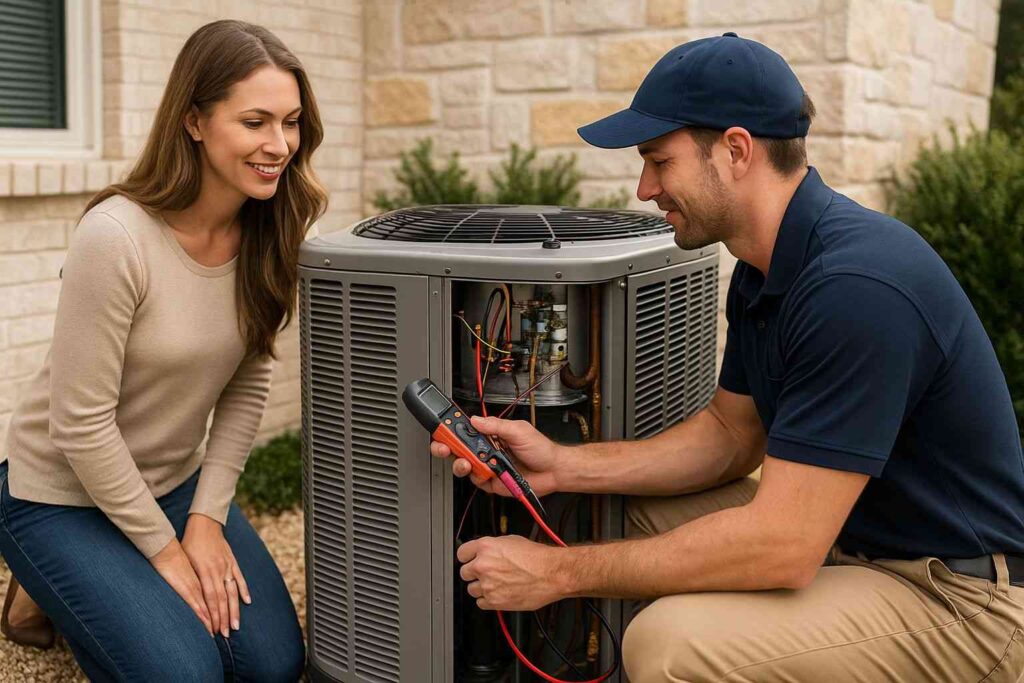
Extreme heat often affects electrical parts long before a homeowner notices a complete failure. Capacitors can degrade as repeated exposure to high temperatures reduces their ability to support motor startup and steady operation. Contactors may develop pitted surfaces that interfere with reliable power transfer, while wiring connections can loosen slightly through expansion, vibration, and prolonged heat exposure. These issues may show up as hard starting, clicking sounds, intermittent shutdowns, or a unit that runs but does not cool consistently. Repairing this type of heat-related damage means testing the electrical system under load rather than only checking whether the unit turns on. Technicians often measure capacitor strength, inspect terminals for discoloration, and verify voltage reaching key components during startup and full operation. The reason this matters is simple: extreme heat magnifies small electrical weaknesses. A component that survives mild days may fail once the system starts running longer cycles in hotter weather. Replacing worn capacitors, damaged contactors, and heat-stressed wiring can restore more stable operation and protect other parts from the ripple effects of unreliable electrical support.
- Correcting Refrigerant and Pressure Problems
Repair solutions for heat-exposed air conditioners must also address refrigerant-side conditions that worsen as outdoor temperatures rise. A unit with a low refrigerant charge, restricted metering device, or dirty indoor coil may still produce some cooling. Still, extreme heat pushes the pressure relationship further out of balance, revealing the weakness more clearly. The compressor may run hotter, the evaporator may struggle to absorb heat efficiently, and the entire cooling cycle becomes less stable. Technicians respond by checking operating pressures, superheat or subcooling where appropriate, and signs of refrigerant loss or restriction that could be driving the system outside normal performance. If a leak is present, the repair should focus on locating and correcting the actual leak rather than repeatedly topping off the charge. If the indoor coil is dirty or airflow is low, the pressure problem may partly reflect poor heat absorption inside the home rather than refrigerant loss alone. In extreme heat, these details matter because even a modest imbalance can create significant strain when the system is already operating near the edge of its seasonal demand.
Reducing Future Strain Through Whole-System Repairs
A useful repair solution for extreme-heat air conditioner problems rarely stops at replacing the part that finally failed. Lasting recovery comes from reducing the conditions that made that failure more likely in the first place. That may involve cleaning coils, correcting refrigerant issues, replacing worn electrical components, improving airflow, and verifying that both the indoor and outdoor fans are moving air as intended. In some homes, it also means checking whether duct leakage, clogged filters, or return-air restrictions are forcing the system to run longer than necessary during periods of high heat. When repair is approached as a whole-system correction instead of a quick response to one symptom, the air conditioner usually returns to steadier cooling with less strain on the compressor and other major components. Extreme heat cannot be removed from the weather, but its impact on the equipment can be reduced when the system is repaired thoughtfully. That wider view helps restore comfort, improve reliability, and support stronger performance when the next period of intense heat arrives.
