
In a market that generates new variety names at a remarkable pace, certain cannabis genetics have demonstrated something genuinely rare — the ability to remain relevant, studied, and sought after across multiple decades of cultivation history. Among the varieties that have earned this distinction through consistent performance and distinctive chemical expression, Sour Diesel and White Widow occupy particularly significant positions in the broader narrative of modern cannabis breeding.
What makes these two varieties worth examining together is not superficial similarity — their profiles are actually quite different — but rather what their enduring presence reveals about what experienced collectors and horticulturalists genuinely value in cannabis genetics.
The Chemical Architecture of Sour Diesel
Few varieties in cannabis cultivation history have generated as much discussion around terpene expression as Sour Diesel. The name itself gestures toward the variety’s most immediately recognizable characteristic — a pungent, fuel-adjacent aromatic profile that sits in stark contrast to the sweeter, fruitier terpene combinations that dominate much of the contemporary seed market.
The dominant terpene in Sour Diesel is typically caryophyllene, a sesquiterpene that also appears in black pepper and cloves, contributing sharp, spicy, and slightly fuel-like aromatic notes. This is often accompanied by significant concentrations of myrcene and limonene, creating a complex aromatic layering that experienced collectors describe as distinctly identifiable even among large collections of varied genetics.
From a breeding perspective, Sour Diesel’s genetic lineage traces back to early 1990s American cannabis culture, with its heritage believed to involve Chemdawg, Northern Lights, and Skunk genetics — a combination that produced something genuinely distinctive rather than simply additive. The variety’s sativa-dominant growth characteristics — considerable vertical stretch, extended flowering period, and long narrow colas — reflect this heritage clearly.
What makes Sour Diesel particularly interesting from a horticultural standpoint is the consistency with which these aromatic characteristics express across different growing environments. Terpene profiles in cannabis are notoriously sensitive to environmental variables, yet the variety’s signature fuel and citrus notes remain recognizable even when growing conditions vary considerably — a marker of genuine genetic stability in its core aromatic expression.
White Widow and the Science of Hybrid Vigor
The story of White Widow represents one of the most compelling examples of what plant breeders call hybrid vigor — the phenomenon where a first-generation cross between two genetically distant parent lines expresses enhanced characteristics compared to either parent individually.
Developed in the Netherlands during the early 1990s through a cross between a Brazilian sativa landrace and a South Indian indica landrace, White Widow brought together two genetic lineages that had developed in dramatically different environmental conditions over centuries. The Brazilian genetics contributed sativa growth characteristics and a complex terpene foundation, while the South Indian genetics introduced the resin production density and structural compactness associated with indica heritage from that region.
The result was a variety that expressed characteristics neither parent possessed to the same degree — a combination of substantial resin development, relatively manageable growth structure, and a terpene profile built around myrcene, caryophyllene, and amyrcene that gives the variety its distinctive earthy, woody, and slightly spicy aromatic character.
What Resin Density Actually Indicates Genetically
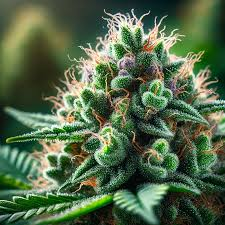
One of White Widow’s most documented characteristics is its exceptional resin production — the dense coating of trichomes that gives mature plants their characteristic frosted appearance and inspired the variety’s name. Understanding what drives this characteristic requires a brief exploration of trichome biology.
Trichomes are the epidermal structures responsible for producing and storing the full spectrum of cannabis’s secondary metabolites — cannabinoids, terpenes, and flavonoids. Their density and development are primarily genetically determined, though environmental factors including light intensity, temperature variation, and humidity management influence their ultimate expression.
The high trichome density characteristic of White Widow genetics reflects the South Indian landrace heritage in its lineage — plants from that region developed exceptional resin production as an adaptive response to intense UV radiation and high temperatures. This adaptation, preserved and amplified through careful selective breeding, is what collectors and horticulturalists are actually working with when they grow White Widow descendants today.
Genetic Influence Across Three Decades of Breeding
Perhaps the most meaningful measure of both varieties’ significance is their influence on subsequent breeding programmes. Sour Diesel’s distinctive terpene architecture has been incorporated into hundreds of subsequent crosses, with breeders specifically selecting for its fuel and citrus aromatic characteristics as a foundation for new variety development.
White Widow’s exceptional resin genetics have proven similarly influential, appearing in the lineage of numerous varieties developed across European and American breeding programmes throughout the 1990s and 2000s. Varieties including White Rhino, Blue Widow, and numerous unnamed experimental crosses carry White Widow genetics specifically because of the resin density characteristics those genetics reliably contribute.
The Endurance Test
What ultimately distinguishes genuinely significant cannabis genetics from the countless varieties that appear briefly and fade is the ability to remain relevant as cultivation knowledge, consumer understanding, and breeding sophistication all advance simultaneously. Both Sour Diesel and White Widow have navigated this test across thirty years of significant industry change — remaining present in serious collections not through marketing momentum but through the consistent expression of characteristics that experienced horticulturalists continue to find botanically compelling.
In a cultivation landscape that sometimes prioritizes novelty over substance, that kind of endurance represents something worth understanding carefully.
