
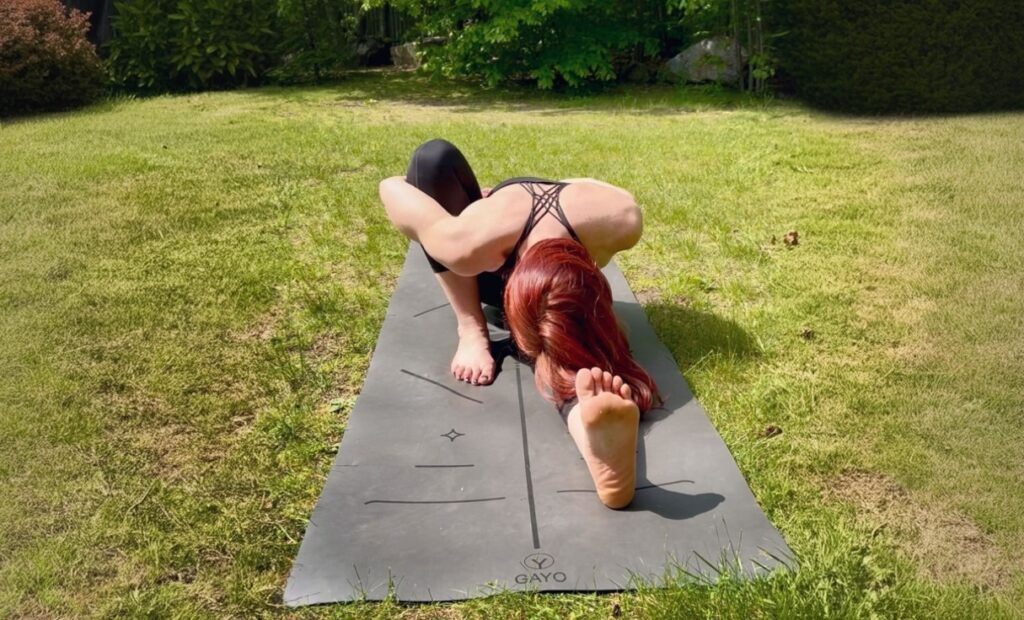
Let me be real with you, I wasted almost eight months on a cheap, flimsy mat before I finally understood what I was missing. Every time I moved into a low lunge, my knee felt the floor through the mat. Every downward dog had me readjusting my hands because the surface kept sliding. When I switched to a yoga mat 5mm thick, the difference was immediate. Not dramatic changes in some over-the-top way. Just finally comfortable, finally stable, finally right.
If you’re still practising on something that came rolled up in a grocery bag for twelve dollars, this post is for you.
What Makes a Yoga Mat 5mm Thick Actually Worth It
The experienced yogis talk about mat thickness just like the runners talk about shoe cushioning. Too thin, and your joints pay for it over time. Too thick, and you lose the ground contact that balance poses depend on.
Five millimetres lands in the right place. You get real protection for your knees in poses like crescent lunge or cat-cow on hard floors. Your wrists don’t scream at you halfway through a flow. And you still feel enough of the floor beneath you to stay balanced in standing poses without wobbling around. Gayo’s Eco Balance Yoga Mat 5mm is made with this in mind.
The mat is built on a natural tree-rubber base, which gives it real weight and grip. It doesn’t curl at the corners or slide around on hardwood floors like cheaper options tend to.
The surface uses EcoLock technology. Which is essentially a blend of rubber and eco-polyurethane. In wet circumstances, it increases traction. Therefore, if you sweat a lot while practicing, the mat actually works for you rather than against you. No more stopping in the middle of a flow to wash your hands and readjust.
Why So Many Yogis Are Moving Toward a Cork Yoga Mat
Cork has been having a moment in the yoga world, and honestly, it makes sense once you use one.
The texture is different from anything synthetic. It’s slightly rough, firm, and warm in a way that feels natural underfoot. But the real reason people switch to a cork mat is performance in heat. Cork grips harder when it gets wet. The opposite of most rubber or PVC surfaces. If you practice hot yoga or you just run warm during class, this alone makes a yoga mat worth trying.
Gayo’s Cork Yoga Mat is made from sustainably harvested cork and sits on a natural rubber base. The rubber keeps it anchored to the floor while the cork surface handles the grip work up top. It’s heavier than a standard mat, which some people don’t love for travel, but for home practice or studio use, it’s completely fine. Cleaning is easy: a quick wipe with a damp cloth, and it’s done. No soaking, no special sprays, no waiting hours for it to dry.
Another overlooked benefit is its natural antibacterial properties, which are more significant than most people realize. Because cork naturally resists bacteria and odor, you do not have to do anything to keep the mat fresh between sessions.
Why Your Knees and Wrists Will Thank You
Here’s something nobody talks about enough: joint pain from yoga is often a mat problem, not a technique problem.
When you’re on a surface that’s too thin or too hard, your body compensates. You shift weight slightly to avoid pressure points. You shorten holds without realizing it, and come out of poses early because your wrist or knee is sending signals. Over weeks and months, that adds up.
A 5mm-thick yoga mat absorbs enough impact to let you actually stay in poses without bracing against the floor. This is especially noticeable in longer restorative sessions where you’re holding positions for several minutes at a time. The cushioning isn’t just comfort; it keeps you in the practice longer and more consistently.
The Alignment Lines Are More Useful Than They Look
Both mats from Gayo have alignment lines printed on them, and if you’ve never used a mat with these, you might not realize how much they help.
They give you a consistent reference for where your hands and feet should land across different poses. Beginners use them to learn placement without guessing. People who’ve been practicing for years use them to catch the subtle drift that happens when you’re tired or distracted. Even small asymmetries in your stance accumulate over time, and having a visual guide makes it easier to stay honest with yourself.
Is a Yoga Mat 5mm Thick Right for Your Practice?
Both options from Gayo work whether you’re six weeks into yoga or six years in. A newer practitioner needs the joint support because their body is still adapting. Most experienced yogis need reliable grip and durability. The cork yoga mat is for people who run warm, get sweaty, and want a more natural surface for practice.
A well-made yoga mat 5mm thick with real grip technology, is not a costly deal. It is the ideal instrument for the task. You should have a strong basis for your practice.
