
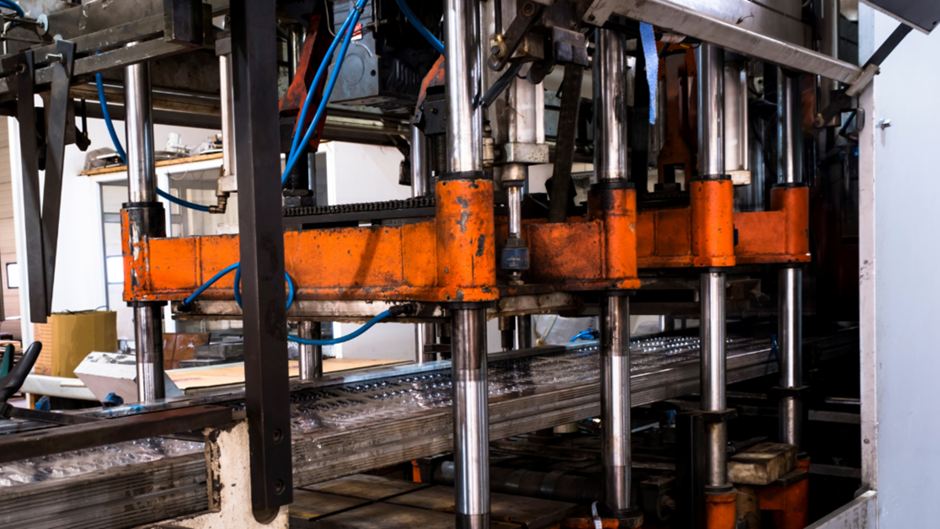
Choosing the right fabrication method for large plastic part manufacturing isn’t just important, it’s everything. When you’re dealing with components too massive or pricey for injection molding, or when metal brings unwanted weight and rust issues, you need something that won’t drain your wallet or wreck your schedule.
Enter thermoforming for large plastic parts. More specifically, heavy gauge thermoforming delivers an unbeatable combo: rapid turnaround, predictable budgets, and creative design latitude for producing custom thermoformed plastic parts at serious volume.
Here’s something that’ll catch your attention: plastic shipping containers made through thermoforming can weigh 30% less than wood, metal, or fiberglass alternatives. We’ll walk through where thermoforming dominates, which design guidelines save you from expensive do-overs, what costs and timelines actually look like, your material palette, and a straightforward selection framework.
Large Plastic Part Manufacturing Realities (Size, Tooling, and Risk)
Here’s the truth: size isn’t merely a spec on your blueprint. It fundamentally alters production from the ground up.
Where “Large” Changes Everything: Tooling Size, Press Capacity, and Handling
Once parts push past conventional footprints, everything shifts. Clamp frame dimensions, heater zone mapping, draw depth calculations, sheet sag management, they all become make-or-break variables.
Your trim approach and material movement demand purpose-built fixtures, while projected surface area determines which machinery can physically handle the work. Get these specs nailed down immediately: part envelope, depth of draw, projected footprint, tolerance specifications, and finish requirements. Skip even one, and you’re adding weeks to your quote cycle.
Performance Demands That Drive Process Choice
What pulls buyers toward thermoforming? Weight savings, resistance to corrosion, electrical isolation properties, impact durability, weather endurance, and chemical compatibility. Think large vehicle body components, equipment enclosures, protective barrier liners, aerodynamic shrouds, safety guards, structural bulkheads, and medical equipment panels, all prime candidates when these performance needs match what plastic thermoforming can realistically accomplish.
Now that size-related constraints are clear, let’s explore how heavy gauge thermoforming flips those limitations into strategic advantages, beginning with tooling expenses that won’t multiply with part dimensions.
Heavy Gauge Thermoforming Advantages for Large Custom Plastic Parts
Thermoforming shines brightest when footprint and intricacy send conventional molding budgets into orbit.
Tooling Economics Built for Big Footprints
Single-sided forming tooling is inherently less complex than multi-cavity injection systems. Consider this: where a company might spend $50,000 on injection tooling, thermoforming can slash that figure to $5,000. Yes, you read that correctly, tooling costs can drop by 90%.
Start with prototype-grade tools (3D printed or urethane board stock), transition to bridge tooling (epoxy blends or aluminum composite), then graduate to production-grade tools (temperature-regulated aluminum) as quantities justify the investment. Move to aluminum once you’re pushing 500+ units yearly, chasing tighter tolerances, demanding premium surface quality, or seeking faster cycle performance.
Fast Iteration Cycles for Custom Thermoformed Plastic Parts
Design revisions hurt far less with thermoforming. Tool adjustments, insert replacements, and trim fixture tweaks often wrap up in days rather than months.
Structure your development around “freeze points”, lock down fit characteristics first, functionality second, aesthetics third, to accelerate production readiness without premature commitments.
Strong Parts Without Heavy Weight
Formed geometry generates rigidity through ribbing, bead patterns, and return flanges. Twin-sheet forming creates sealed internal cavities, structural stiffness, and integrated channels or grip features for impressive strength-to-weight ratios. When lightweight robustness matters most, twin-sheet construction delivers without mass penalties.
These benefits sound attractive, but savvy buyers need direct comparison data: when does thermoforming genuinely outperform injection molding in terms of expense, schedule, and overall program value?
Thermoforming vs Injection Molding for Large Parts (Decision Framework)
Stop guessing. Use this framework that aligns your real-world requirements with the optimal process.
Cost, Lead Time, and Break-Even Volume Comparison (Practical)
Tooling investment ranges differ wildly. Thermoforming tools typically span $1,000–$20,000, while comparable injection molds start around $50,000 and climb steeply. Lead times for thermoforming tools run one week (prototype stage) to six weeks (production aluminum), compared with 12–20 weeks for injection tooling.
Thermoforming vs injection molding break-even analysis hinges on yearly volume, part dimensions, finish standards, tolerance zones, and assembly complexity. Thermoforming usually wins below 10,000 annual units for oversized parts; beyond that threshold, injection might pencil out if per-unit savings compensate for elevated tooling investment.
Geometry and Feature Limits to Plan Around (So the Quote Doesn’t Surprise You)
Undercuts, sharp interior corners, consistent wall sections, fine surface texture reproduction, and delicate features present challenges in thermoforming. Solutions include secondary operations like CNC trimming, drilling operations, adhesive bonding, formed-in features with adequate draft and radii, insert placement, and thoughtfully engineered snap-fit features.
Tolerance Expectations for Large Plastic Part Manufacturing
Sheet gauge variation, material shrinkage, mold temperature, cooling uniformity, and component warpage all impact dimensional accuracy. Boost consistency through controlled cooling circuits, precise heater zoning, plug-assist technology, thickness mapping, solid datum strategies, and precision trim fixturing.
Anticipate ±0.030″ on large components; tighter specs demand greater investment. Understanding volume-based process selection is only half your puzzle, next up are design tactics that prevent material thinning, warpage, and costly rework before the first tool gets machined.
Design Strategies That Make Thermoforming for Large Plastic Parts Succeed
Smart design eliminates problems before they surface, and reduces costs at every production phase.
DFM Rules That Prevent Thinning, Webbing, and Warpage
Include draft angles and generous radii to prevent extreme draw ratios. Incorporate beads, ribs, and return edges to boost rigidity without thickness increases. Plan vent paths, eliminate trapped air pockets, and manage corner transitions with care. Warning signs include sharp corners, excessive draw depth, and thin-wall sections in high-stress locations.
Plug-Assist and Pressure Forming Tactics for Better Detail on Big Parts
Vacuum pressure alone falls short for deep draws or fine detail work. Pressure forming enhances definition, particularly on large cosmetic-critical panels. Plug material selection influences wall thickness distribution and enables deeper draws without problematic thinning.
Trim and Downstream Operations Engineered in from Day One
Evaluate trim methods: steel rule die, matched-metal trim, 3/5-axis CNC routing, or robotic trimming systems. Design appropriate trim flanges, incorporate locating holes and datum pads, and avoid “floating” edges that vibrate during routing. CNC routing provides flexibility; matched-metal trim boosts speed at production volumes.
Even perfectly designed parts fail when materials can’t withstand UV degradation, impact forces, or chemical exposure in your operating environment, so material selection must sync with real-world performance requirements from the start.
Material Selection for Custom Thermoformed Plastic Parts (Performance + Environment)
Your material choice determines whether components last weeks or decades.
Material Picks for Large Parts (Impact, UV, Heat, Chemical Resistance)
ABS and ABS-PC blends provide toughness and surface finish. HDPE delivers chemical resistance and impact strength. Polycarbonate handles high-impact loads and elevated temperatures. PETG offers optical clarity and excellent formability.
PP works for fatigue-resistant applications. TPO and acrylic-capped sheets excel in outdoor environments with UV and weathering resistance. Match materials to applications: outdoor enclosures require UV-stabilized caps, vehicle body components need impact resistance, and industrial containment liners demand chemical compatibility.
Sustainability and Circularity Options Beyond Competitor Coverage
PCR and PIR content in heavy-gauge materials can introduce appearance variations and property impacts. Design for end-of-life recycling using mono-material approaches, avoiding incompatible coatings or adhesive systems. Clear labeling and take-back initiatives support circular economy goals.
Selecting the right sheet matters enormously, but understanding how that material gets heated, formed, cooled, and controlled at scale reveals whether your manufacturer can deliver consistency across hundreds or thousands of large components.
Manufacturing Process for Heavy-Gauge Thermoforming (High-Level but Practical)
Process control separates dependable suppliers from inconsistent ones.
Heating Control for Large Sheets (the Real Differentiator)
Ideal forming temperature for PP materials typically ranges between 150°C and 220°C, depending on sheet thickness and specific equipment capabilities. Heater zoning precision, infrared control, and sag management grow increasingly critical as part dimensions expand. Define acceptable cosmetic zones and thickness targets upfront; request thickness mapping during sampling phases.
Cooling and Dimensional Stability on Large Footprints
Mold temperature regulation, water channel design, and fan cooling strategies minimize internal stress. Controlled cooling ramps, proper demold timing, and fixture cooling prevent warpage problems.
Quality Plan That Scales (from Prototype to Production)
First-article inspection protocols, ultrasonic thickness gauging, CMM or 3D scanning for geometry validation, SPC on critical dimensions, and visual acceptance criteria for cosmetic panels ensure batch consistency. Equipment failures cause up to 30% of production downtime, making preventive maintenance non-negotiable.
Traditional thermoforming already offers speed and cost benefits, but leading manufacturers now integrate digital simulation, robotics, and hybrid techniques that reduce development risk and expand what’s achievable on oversized parts.
Trending and Innovative Thermoforming Capabilities (Differentiators Competitors Missed)
Innovation isn’t only about resins, it’s about smarter tooling and workflows.
Digital Prototyping + Simulation for Thermoforming (Predicting Thinning & Warpage)
Forming simulation software predicts wall thinning patterns, thermal hot spots, and drawing complications before expensive tooling gets cut. Supply CAD geometry, material specifications, sheet thickness, draw depth requirements, and texture zone details for accurate predictive modeling.
Automated Trimming and Robotics for Repeatability on Big Parts
Robotic material handling and automated stacking reduce surface scuffs and dimensional variability. Automation investment pays dividends at production volumes, for cosmetic-critical applications, or when skilled labor is constrained.
These innovations aren’t theoretical concepts, they’re generating measurable ROI in transportation, industrial equipment, medical enclosures, and other sectors where large plastic components replace heavier, pricier alternatives.
Final Thoughts on Choosing Thermoforming for Your Large Plastic Parts
Thermoforming brings together low tooling investment, rapid iteration capability, lightweight structural strength, and design flexibility in one package. When parts outgrow injection molding capacity or when metal introduces excessive weight, thermoforming steps up.
Align your performance requirements with appropriate materials, partner with suppliers who genuinely understand DFM principles, and specify correct tolerances and secondary operations from day one. Make informed choices, design intelligently, and you’ll receive components that perform, delivered on schedule and within budget.
Your Questions About Large Thermoformed Plastic Parts, Answered
1. Can thermoforming produce large parts with tight tolerances, and what tolerances are realistic?
Absolutely, but anticipate ±0.030″ on oversized components. Tighter dimensional control requires controlled cooling systems, precise heater zoning, and accuracy-focused trim fixturing, all increasing investment and lead time.
2. At what volume does injection molding become cheaper than thermoforming for large plastic parts?
Generally, around 10,000+ units yearly for large components. Below that volume threshold, thermoforming’s reduced tooling investment and faster iteration cycles typically win on total program economics.
3. Can heavy-gauge thermoforming create structural parts, or is it only for covers and panels?
Heavy-gauge thermoforming absolutely produces structural components using formed geometry, rib structures, and twin-sheet construction. Sealed internal cavities and integrated functional features deliver rigidity without metal reinforcement.
